
PROCTORING EXPLAINED
What is a proctored exam?
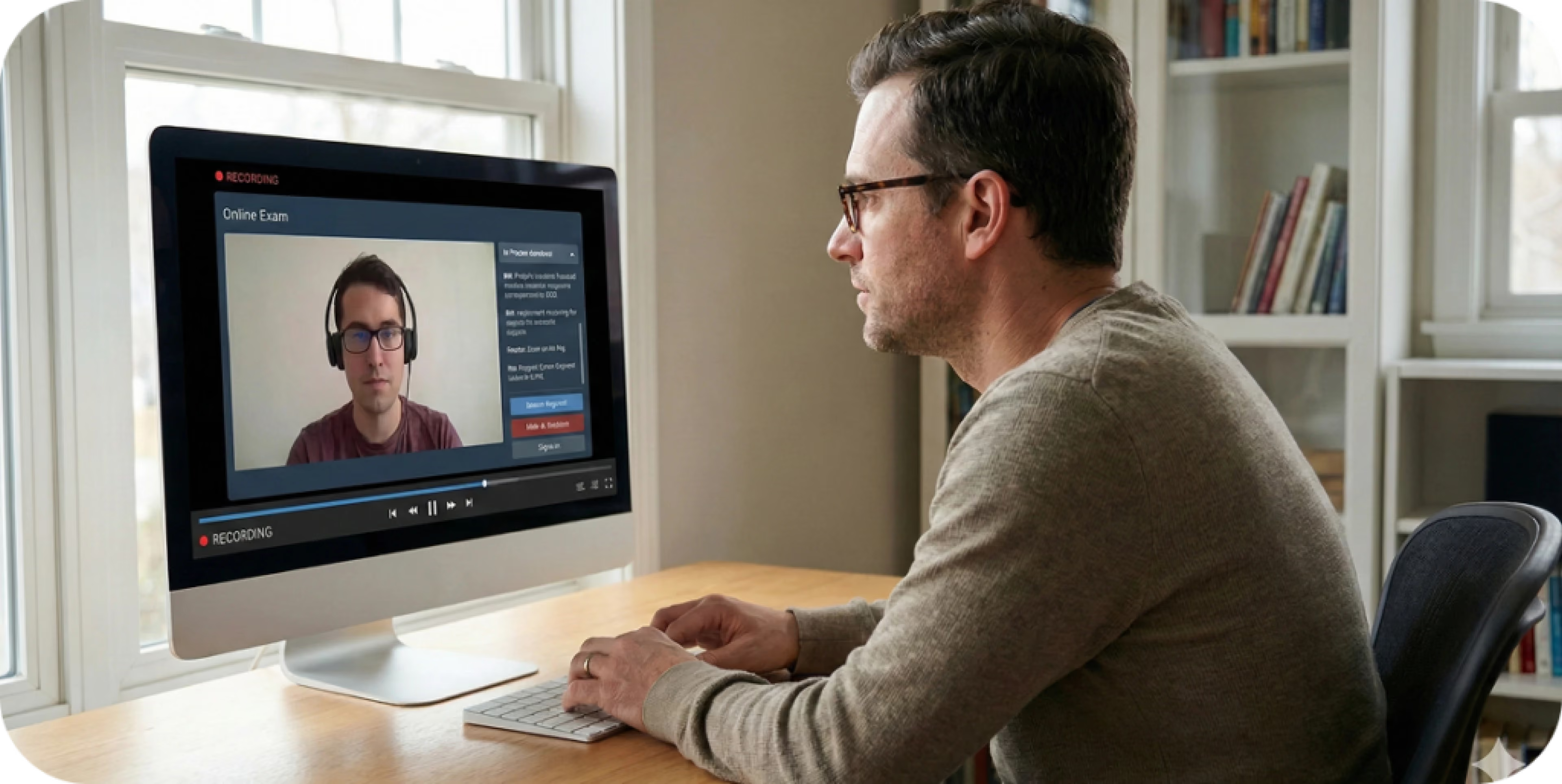
A proctored exam is a supervised test that confirms who is taking it and that the rules are followed. It can happen in person or online, through a webcam, microphone and browser.
THE BASICS
What does proctoring mean?
Proctoring means supervising an assessment to protect its integrity. The proctor, also called an invigilator in some countries, helps make sure the result fairly reflects the test taker’s own work.
Traditionally, supervision happened in an exam room. Today, many exams are proctored online. The goal is the same either way: a result that fairly reflects the test taker’s work.
ONLINE PROCTORING
Online exams at home, at work or in the field
Online proctoring lets people complete assessments from an approved location, with the same goal as an exam room: verify identity and support a result your program can trust.
At home
Complete an assessment without travelling to a test centre.
At work
Take required exams and certifications from an approved workplace setting.
In the field
Support frontline and field workers taking assessments from suitable approved locations.
FROM SIMPLEST TO MOST THOROUGH
What are the four types of online proctoring?
There are four main types. They differ in what they can see, who reviews it, and how well a result holds up if it’s ever challenged.
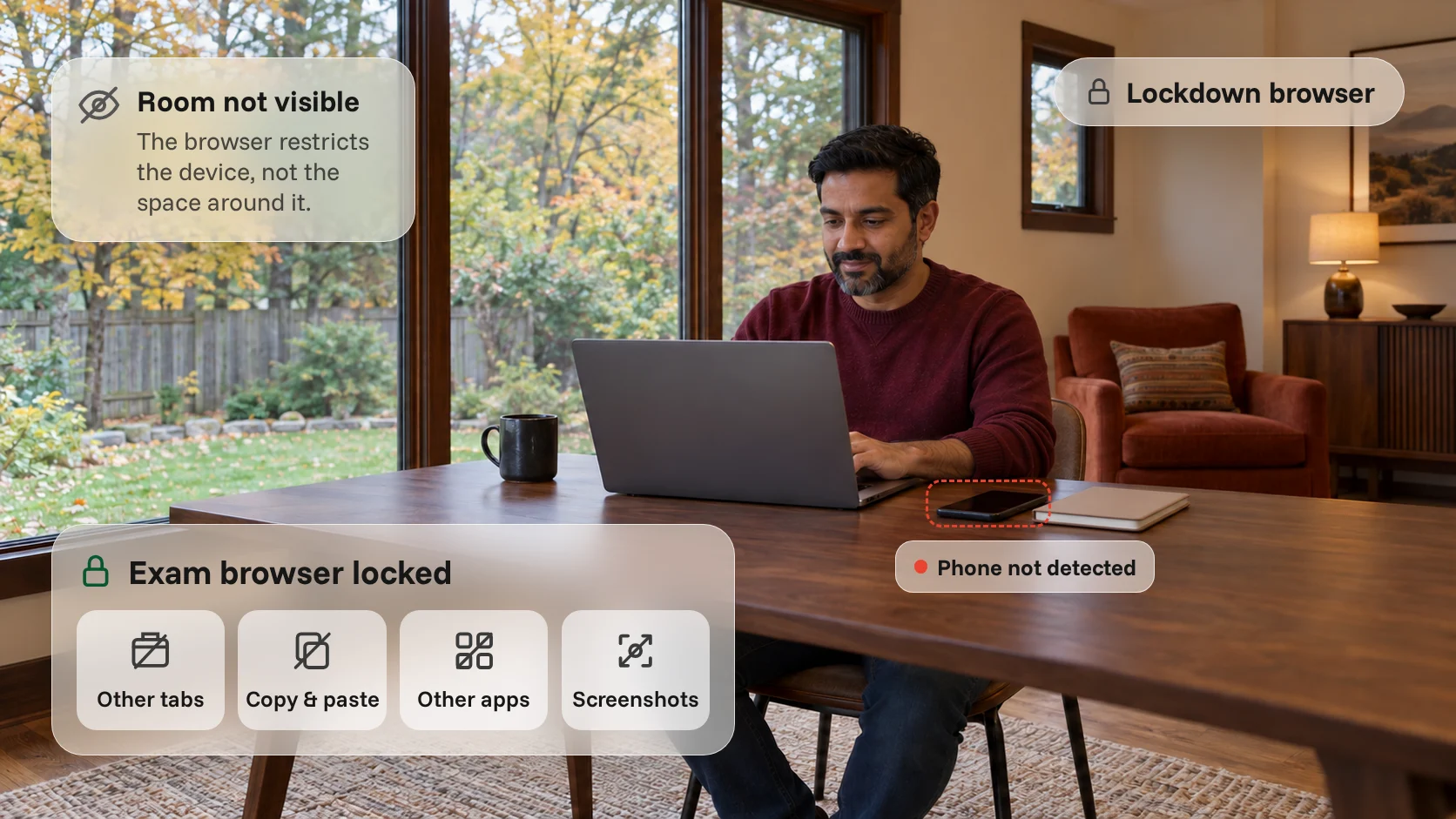
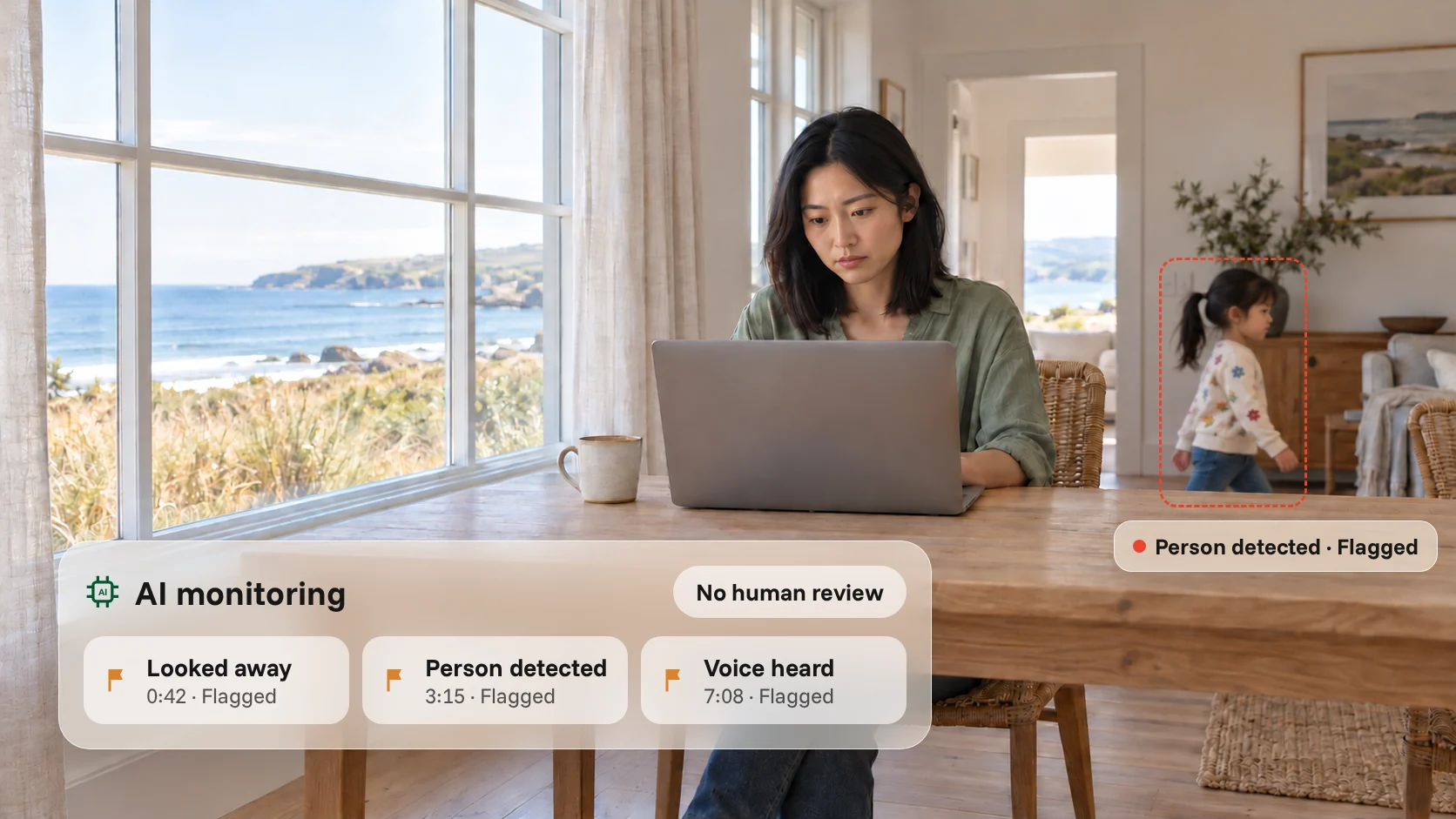
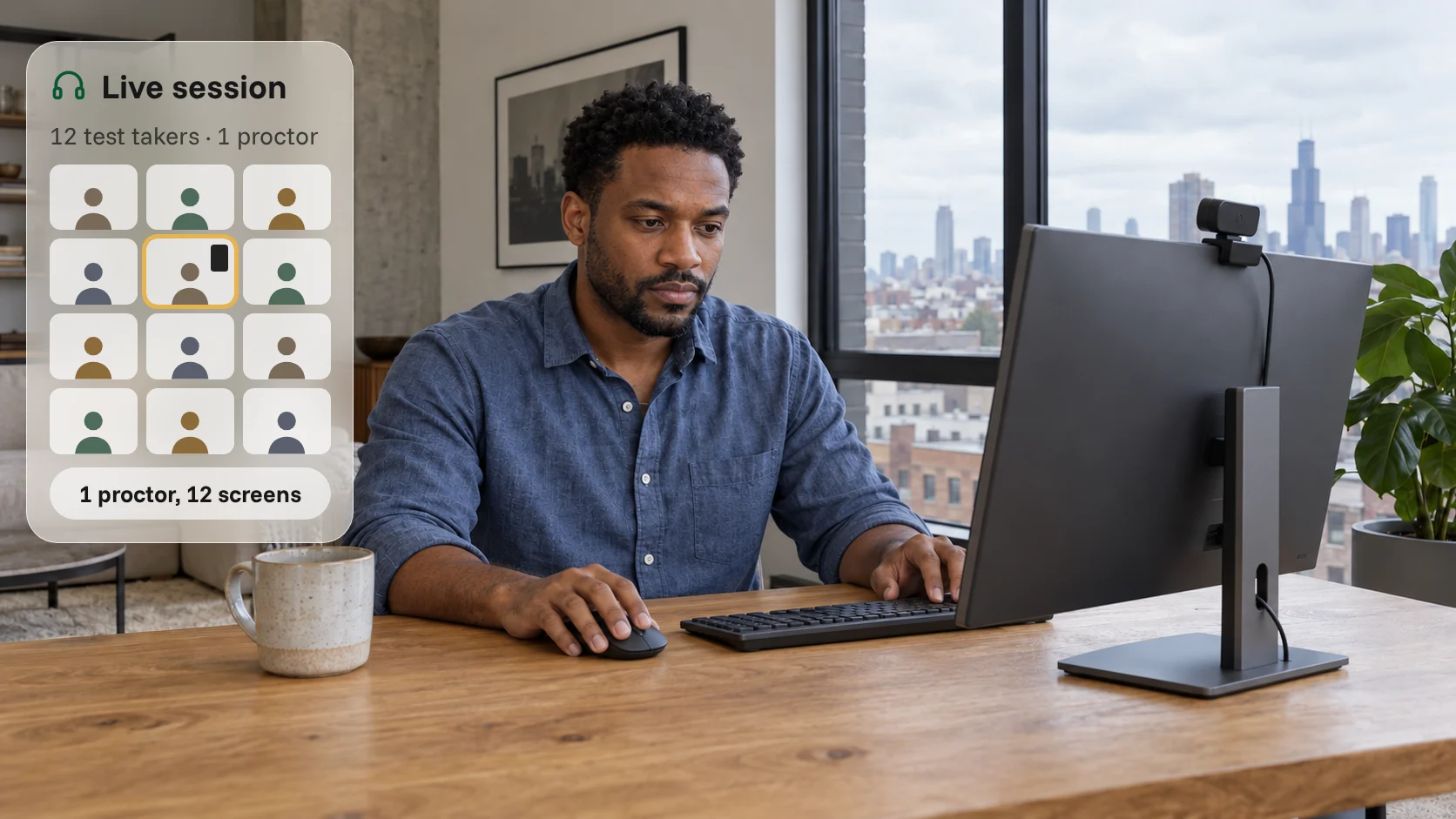
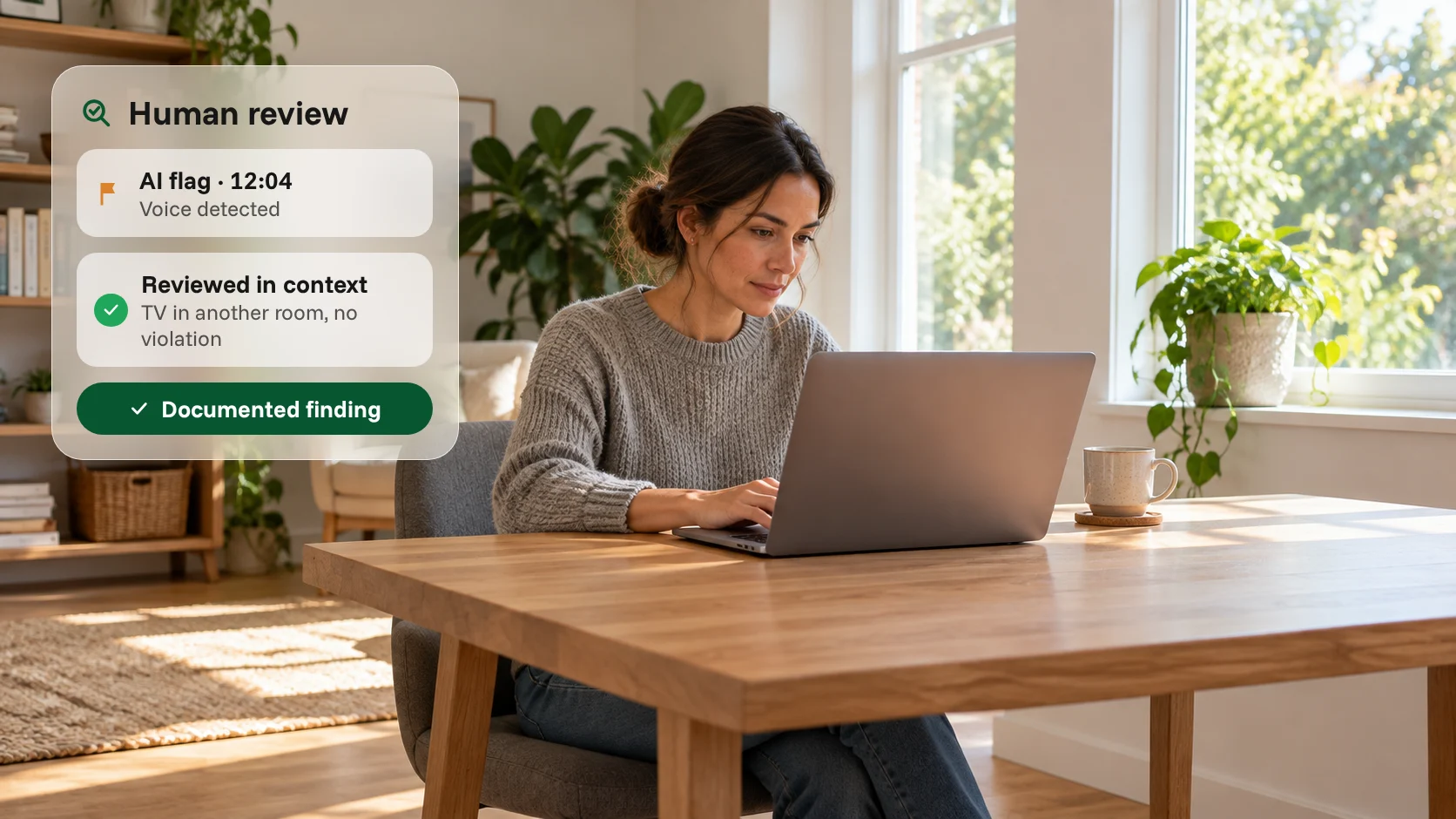
SIDE BY SIDE
Compare the four approaches
Features vary by provider, and some services combine approaches.
WHY HYBRID
Why choose hybrid proctoring?
Hybrid proctoring pairs automated detection with human judgment, so programs get scale and a reasoned, documented finding behind every concern.
Context behind every concern
Trained reviewers tell an incidental moment from a real rule violation.
Reviewed findings, not raw flags
Your team gets documented conclusions instead of a queue of alerts.
Results you can explain
If a result is questioned, the review record shows what was observed and why.
Nothing to download
Integrity Advocate runs in a supported browser, with no app to install.
10M
sessions proctored
98%
client retention rate
Zero
data breaches in 12+ years
<1%
of BCIT students needed support across 13,000+ exams
ON EXAM DAY
What happens during a proctored exam?
Three stages work together: identity before the exam, oversight during it and review after it.
ADDITIONAL RESOURCES
Learn more about online proctoring
Explore guides, research and real-world insights on assessment integrity, identity verification and human review.
AI-Only, Live, or Hybrid: Which Proctoring Model Is Right for Your Program?
April 7, 2026
|
8
min read
Before you compare proctoring features or pricing, the model underneath matters most. This post breaks down AI-only, live, and hybrid proctoring, where each fits, and why not all hybrid models are actually hybrid.

Why Automated Identity Verification Isn’t Enough for High-Stakes Exams
May 18, 2026
|
10
min read
All proctoring vendors say they verify identity, but they don't all mean the same thing. Explore where automated-only ID checks fall short and what to ask when evaluating a platform.

AI-Only Proctoring Has a False Positive Problem. Here’s What That Costs Your Program.
June 24, 2026
|
5
min read
AI-only proctoring flags behavior. It doesn't evaluate it. When automated systems skip human review, wrongful invalidations follow, and programs are left with outcomes they can't defend.
Preguntas frecuentes
Quick answers about proctored exams and online proctoring.
Yes, if your exam program permits remote testing and your space meets its requirements. Some exams require a private room; others allow different approved locations. Check before booking or starting.
Many online proctored exams require a webcam, but requirements vary. In-person exams may be supervised without one. Follow the equipment requirements for your specific assessment.
Some services require a dedicated application or extension. Others, including Integrity Advocate, operate through a supported browser without a software installation. Check your exam instructions before you begin.
Requirements vary, but plan for a supported device and browser, a working webcam and microphone if required, a stable connection, accepted ID and a suitable, well-lit space. Run the provider’s system check on the device you plan to use.
A flag marks activity that may need review, such as another person on camera, leaving the camera view, voice activity or restricted resources. A flag alone doesn’t establish that a rule was broken. A reviewer considers what happened, what the exam allowed and any accommodations.
Depending on the platform and exam settings, online proctoring may capture webcam video, microphone audio, shared-screen content and assessment activity. Read the permission requests and privacy information before you start.
Some tools can restrict or detect activity linked to AI use, such as restricted websites or browser extensions. A flag alone can’t prove an answer was AI-generated, so concerns should be assessed with the evidence, the exam rules and context.
If you need to deliver exams at scale and explain integrity findings, choose an approach with human review and clear documentation. Integrity Advocate’s managed hybrid proctoring combines browser-based delivery, automated detection and trained reviewers.

A result your program can stand behind
See how identity verification, automated detection and trained human review come together. We’ll walk through the test taker experience, review process and reporting using your requirements.
10M+
Total session proctored
65+
Languages supported
98%
Client retention rate