October 29, 2026
|
5
min read
Who reviews your exams? Inside the human review behind every result
Human review only makes a result defensible when you know who did the reviewing. Here’s how our full-time team reviews every session, how a second reviewer checks the work, and what test takers see when something is flagged.


When a result gets challenged, the first question is rarely about the algorithm. It is about people: who looked at this session, what they were trained to look for, and how you know their judgment was sound. For a director of certification or a registrar, those questions can arrive months after the exam, from a regulator, an appeals panel or the candidate, and the answer needs to already be on record.
Much of the online proctoring market now says that humans make the call. Far fewer explain who those humans are. That gap matters, because human review only makes a result defensible when the review itself can be described, checked and repeated. Here is how review works at Integrity Advocate, from the people who do it to what happens when a decision is questioned.
Our reviewers are our own team
Every session is reviewed by Integrity Advocate’s own full-time reviewers. They are not an agency or a pool of contractors, and they are not your staff working through a queue at the end of the day. A team that trains together, works to the same standards and answers to the same leadership produces judgments you can compare from one session to the next.
All reviewer work runs through Integrity Advocate’s Canadian infrastructure. Access requires a named account with multi-factor authentication and is limited to the sessions each reviewer is assigned, and everyone with access has signed an NDA and passed a criminal background check.
Every session gets a full review
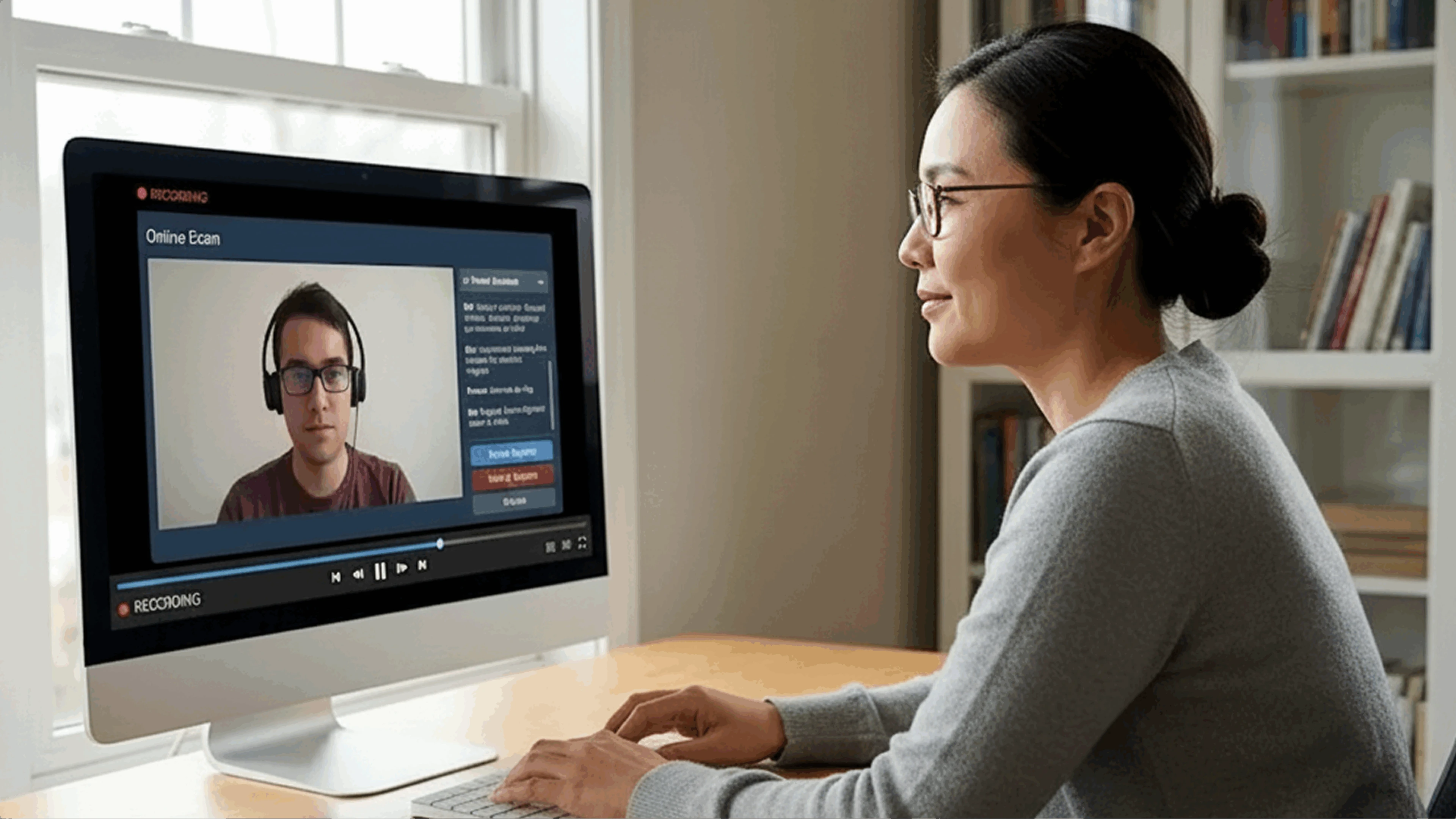
Automated detection has a useful job: it points a reviewer to the exact moment something in a session looked different from expected. A detection is a prompt rather than a verdict, though, so at Integrity Advocate every session is reviewed in its entirety by a person who checks each detection against the actual frames, with the full context of the session around it.
Context is what turns a signal into a finding or rules it out. A reviewer can recognize that a candidate looked away to think, that a young child wandered through the room, or that an item on the desk was one the program allows, where a detector would only register movement or an object. Each review ends in a written outcome recording what was flagged, what the reviewer observed and the reasoning behind it, and there is no automated pass or fail.
How reviewers are trained
No one reviews a live session until they have completed structured onboarding. After that, reviewers take part in ongoing refreshers, which keep standards current as new tools and new behaviours appear, including AI-assisted methods that leave little visible trace.
This is also where human review earns its place as AI tools spread. Because a trained person examines each session, a new or uncommon tool can be recognized the first time it appears, instead of waiting until an automated system has seen it often enough to learn it. Once reviewers understand it, it is added to detection.
A second reviewer checks the work
The majority of sessions are audited by a second reviewer, who confirms the details of the original review. That audit does two things at once. It confirms results before anyone relies on them, and it keeps the whole team consistent, because any difference in judgment surfaces quickly and feeds straight back into training.
How serious cases are escalated
Some situations deserve more than one person's view before they reach a program. When a review raises a serious concern, it moves from the reviewer to a team lead and then to the client, with the evidence attached. The program receives a documented case it can follow from start to finish, rather than an alert it has to investigate from scratch.
The program makes the decision
Integrity Advocate reviews each session against the rules a program sets, at the enforcement level the program chooses, and the final academic or certification decision always belongs to the program. IA never makes that call. The reviewer's job is to give the people who own the decision clear, fair evidence they can stand behind.
Test takers see the same evidence you do
A defensible result also depends on what the test taker can see. By default, each participant receives an email with their session status, and if anything was flagged, that email includes the flagged screens and the name of the rule that was triggered. The participant sees the same proof the program sees, and programs can turn this notification on or off.
If a participant disagrees with a flag, they raise it with the program, which owns the decision. Because both sides are working from the same record, that conversation starts from evidence instead of suspicion.
Thorough review without the wait
Turnaround is set by each customer. The standard for non-urgent work is 24 hours, and in practice results usually arrive within hours. If a program needs results faster, we agree on a turnaround up front. For large exams that run on a single day, we plan extra reviewer shifts with the client in advance. Either way, every session still gets a full human review.
Privacy is part of the review
More people reviewing sessions can sound like more privacy risk. At Integrity Advocate, reviewers are part of the protection, because they blur and block categories of incidental personal information before a session reaches the client's portal, so programs see what they need to decide and nothing more. Data is encrypted in transit and at rest, we are SOC 2 Type II certified, and unflagged sessions are deleted after 24 hours by default. The full detail is in the Security & Privacy Overview.
When a result is challenged
Standards bodies are asking the same questions buyers are. ISO/IEC 17024:2026 asks certification bodies to show documented human oversight wherever AI influences candidate monitoring, with an accreditation clock already running.
So picture that challenge arriving again. With this model, your answer is that a trained member of our own team reviewed the whole session against your rules, a second reviewer checked the work, any serious concern reached you with its evidence, and the test taker saw the same record you did. That is a result you can explain, and one that holds up as fair, trustworthy and defensible.
{{post-cta}}
Keep reading

AI vs. Human vs. Hybrid Proctoring: Which Model Best Protects Exam Integrity?
October 9, 2025
|
4
min read
As online testing expands across education, certification, and compliance training, the choice between AI-only, human-only, and hybrid proctoring has real consequences for exam integrity, fairness, and organizational risk. This post breaks down all three models, their pros and cons, and when each is the right fit, concluding that hybrid proctoring delivers the best combination of efficiency, accuracy, and fairness for most modern assessment environments.

What Happens After an Exam Flag? Inside Human Review
September 3, 2026
|
4
min read
Most proctoring platforms stop at the flag. Integrity Advocate does not. This post walks through what a trained reviewer actually looks at, how a decision gets documented, and what happens if a test taker disputes the outcome, so admins know exactly what stands behind every result.
Why Hybrid AI + Human Review Delivers Fairer, More Accurate Proctoring
December 10, 2025
|
6
min read
AI-only proctoring is fast but context-blind, flagging neurodivergent behaviors, assistive technology, and environmental interruptions as suspicious. Human-only proctoring is fair but cannot scale consistently or cost-effectively. Hybrid AI plus human review combines the speed and pattern recognition of automation with the contextual judgment, empathy, and accountability that only people can provide. This post examines where each model falls short, what hybrid review actually delivers, and why it is becoming the baseline expectation for institutions that need proctoring to be both strong and humane.
Frequently asked questions
Find answers to the most commonly asked questions from our clients.
Human review in online proctoring means a trained person examines an exam session before any outcome is issued, instead of relying on automated flags alone. At Integrity Advocate, every session is reviewed in its entirety by a trained reviewer who checks each detection against the actual frames and records written reasoning.
Integrity Advocate's own full-time review team reviews every session, not an agency or contractors. Reviewers work only through secure virtual desktops hosted on AWS in Montreal, with named accounts, multi-factor authentication, NDAs and criminal background checks, so nothing is downloaded to a personal machine.
Every Integrity Advocate reviewer completes structured onboarding before working on a live session, then takes part in ongoing refreshers. Training keeps review standards current as new tools and behaviours appear, including AI-assisted cheating methods that leave little visible trace.
Yes. After every session receives a full human review, the majority of Integrity Advocate sessions are audited by a second reviewer. The audit confirms the details of the original review and keeps judgments consistent across the whole review team.
With Integrity Advocate, yes by default. Each test taker receives an email with their session status, and if anything was flagged, it includes the flagged screens and the name of the rule that was triggered, which is the same evidence the program sees. Programs can turn this notification on or off.