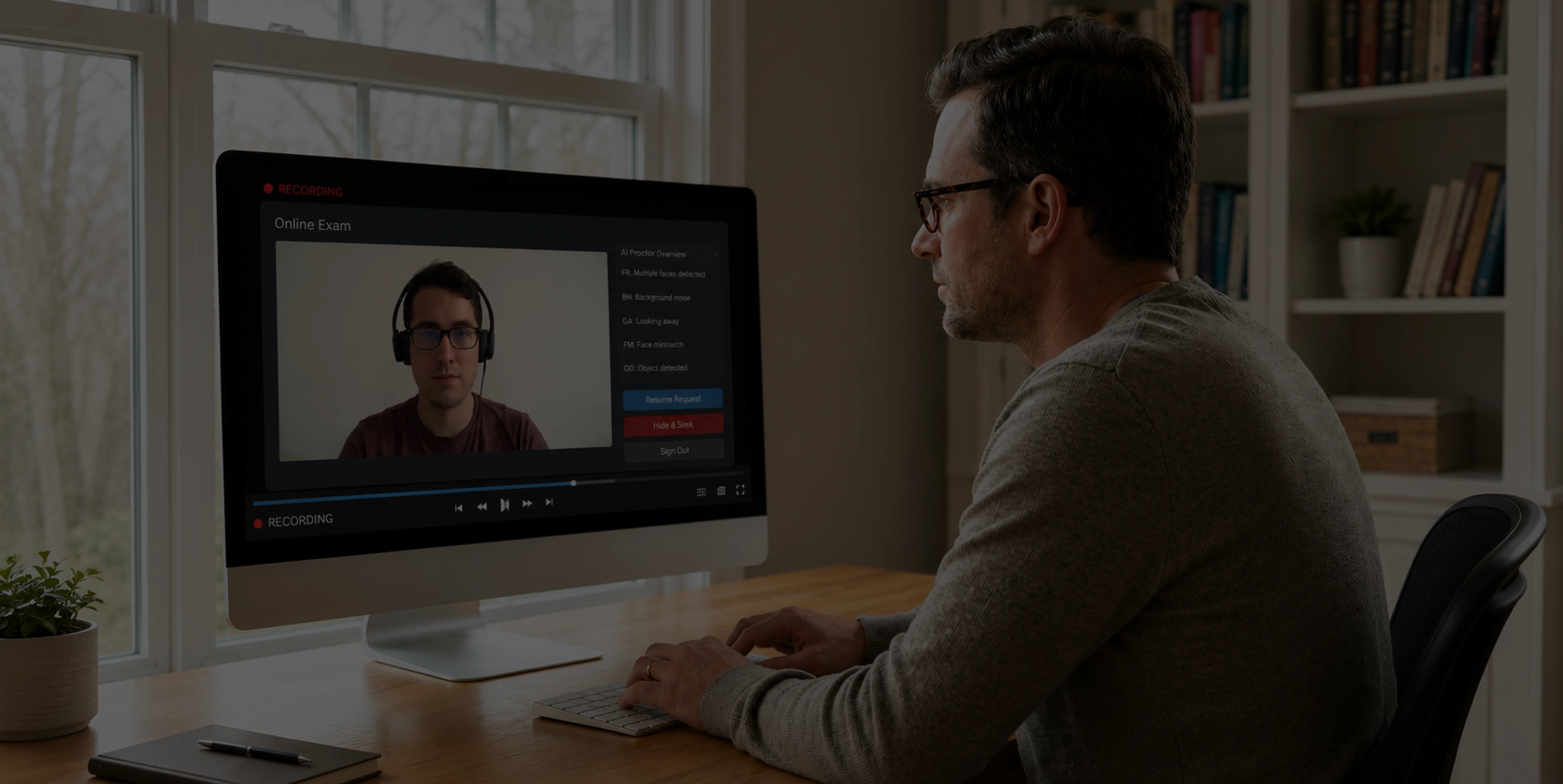
HYBRID AI + HUMAN REVIEW
AI sees patterns. People see people.
Every assessment outcome combines AI-powered detection with trained human judgment, giving your program decisions that are fair, consistent, and defensible.
WHY HUMAN REVIEW MATTERS
Assessment integrity starts with the right decision
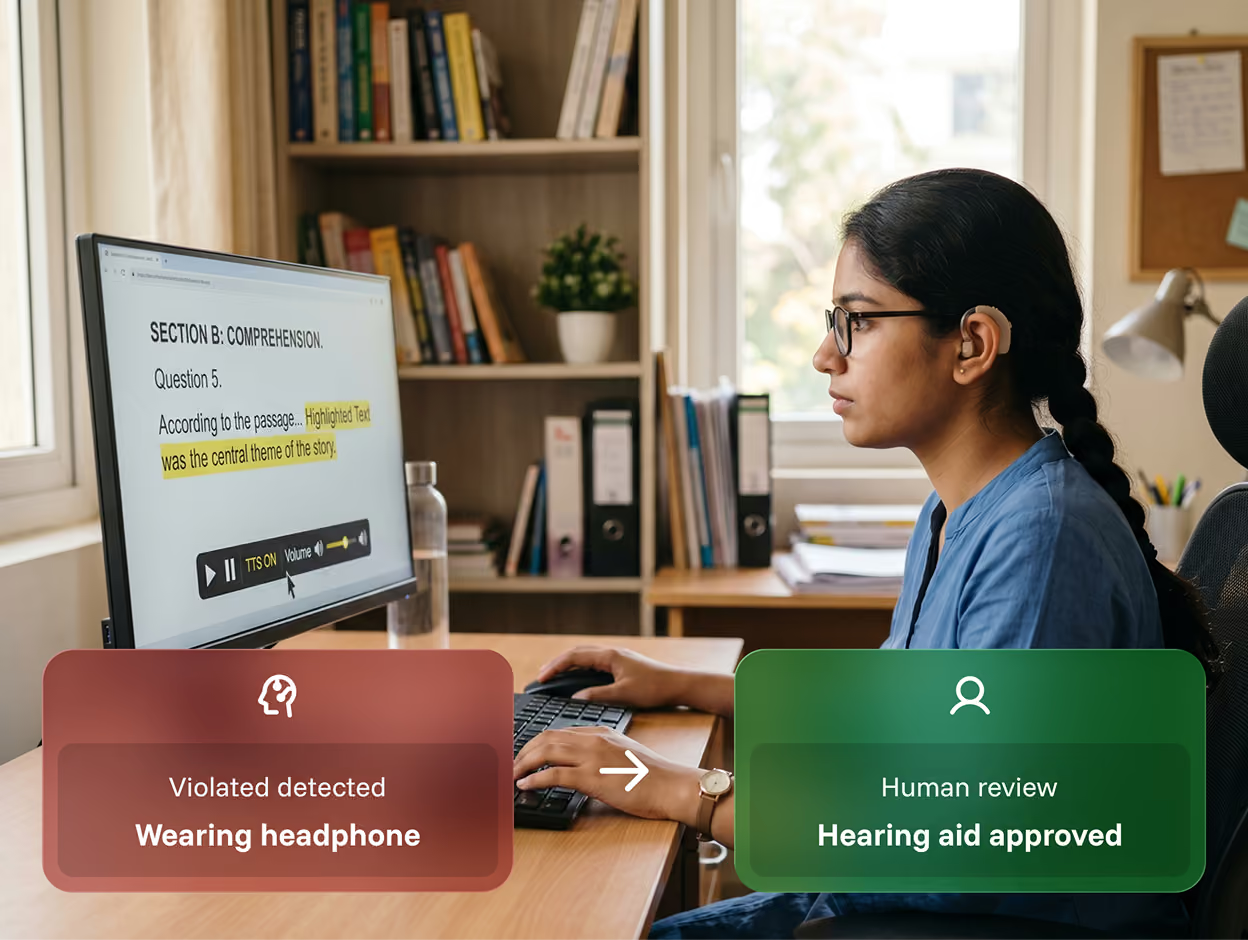
Every integrity decision carries real consequences. A child entering the room, a participant glancing away, or poor lighting can trigger an automated flag without indicating misconduct.
AI can identify patterns, but it cannot fully understand context. Human review helps ensure every decision is fair, consistent, and aligned with your policies.
OUR PHILOSOPHY
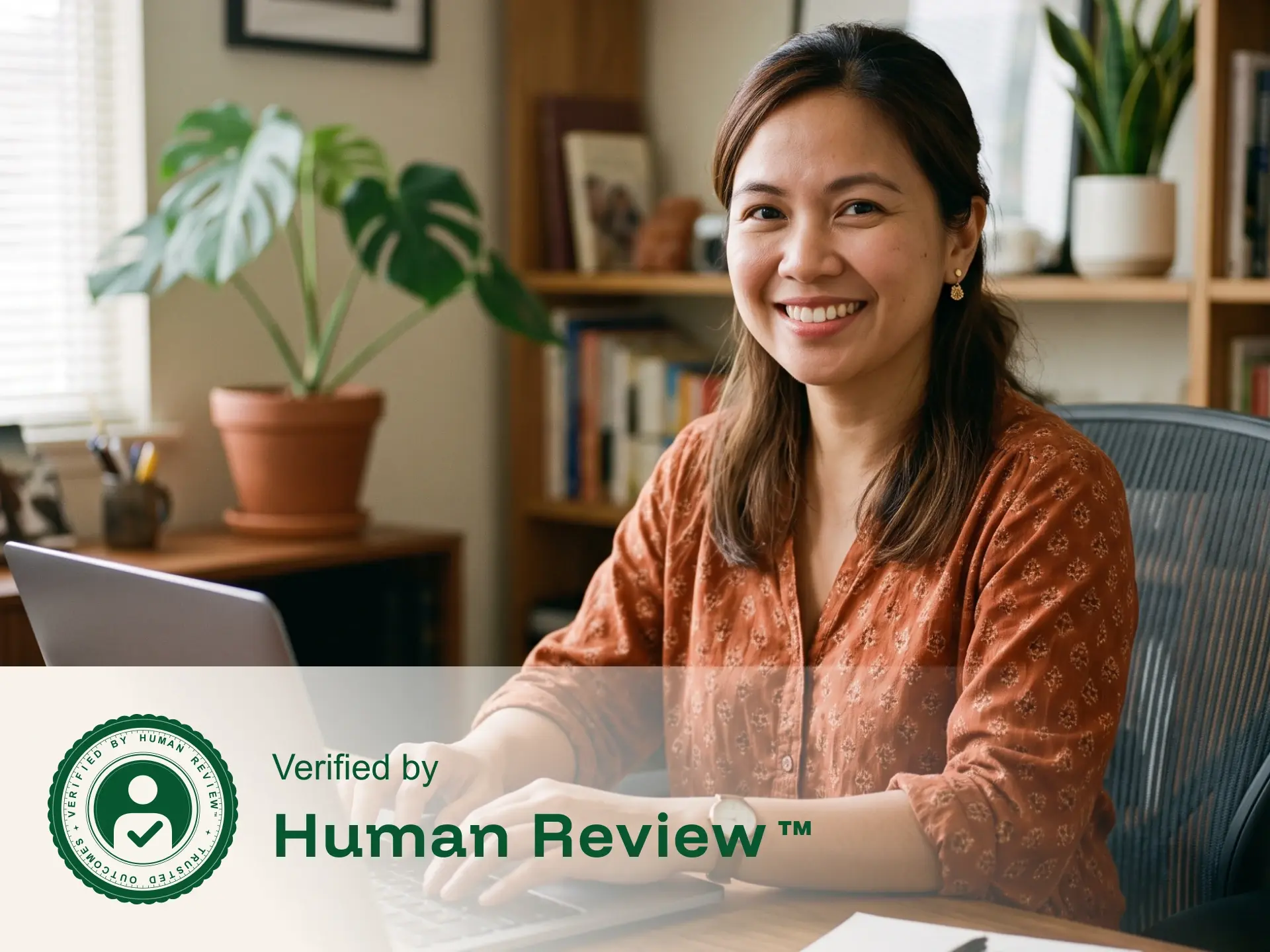
Verified by Human Review™
Every identity check, AI flag, and assessment outcome is reviewed by a trained specialist who brings context, judgment, and consistency to the process.
What AI detects, human judgment understands
The difference between detecting behavior and understanding context is the difference between an automated flag and a fair decision.
AI flags, humans verify
AI detects potential issues. Human reviewers verify the results.
Face mismatch
HUMAN REVIEWS
Lighting, document quality, legal name changes
Lighting, document quality, legal name changes
Looking away
HUMAN REVIEWS
Accommodations, screen layout, natural movement
Accommodations, screen layout, natural movement
Background noise
HUMAN REVIEWS
Normal environment vs. outside assistance
Normal environment vs. outside assistance
Multiple faces
HUMAN REVIEWS
Reflection, posters, mirrors, actual person
Reflection, posters, mirrors, actual person
Object detected
HUMAN REVIEWS
Permitted materials vs. unauthorized resources
Permitted materials vs. unauthorized resources
HOW HUMAN REVIEW WORKS
Four steps from detection to defensible decisions
Every identity check follows a connected process before the assessment begins, creating a secure, time-stamped record your program can reference for appeals, audits, compliance reporting, accreditation reviews, or internal quality assurance.
Detect
AI continuously monitors assessment activity and identifies events that may require review.
Review
A trained Integrity Advocate specialist evaluates each event in context using your organization's policies.
Verify
The reviewer determines whether the activity represents a legitimate concern or an acceptable situation.
Document
Every outcome is supported by timestamps, evidence, reviewer notes, and a complete audit record.
WHAT HUMAN REVIEW EVALUATES
Every assessment is reviewed from multiple perspectives.
Reviewers don't rely on a single AI score. They evaluate identity, participant behavior, your program's policies, and supporting evidence before every assessment outcome is finalized.
Confirm that identification matches the participant, and the person enrolled; while accounting for document quality, lighting, legal name variations, and other real-world scenarios.
Differentiate suspicious activity from normal movement, accessibility accommodations, or environmental distractions.
Apply your organization's rules consistently across every assessment rather than relying on generic AI thresholds.
Our expert human reviewers review every event before it becomes part of the official assessment record.
WHAT THIS MEANS FOR YOUR PROGRAM
Better decisions create stronger programs.
Human review improves more than assessment integrity, it improves confidence across your entire organization.
Fewer false positives
Reduce unnecessary escalations and protect legitimate participants.
Stronger defensibility
Every decision includes documented evidence that can be explained during appeals or audits.
Greater trust
Faculty, certification boards, regulators, and candidates have confidence that outcomes weren't determined by automation alone.
Consistent outcomes
Apply the same documented review process across every assessment, every program, and every participant.
AI-ONLY VS. HUMAN-VERIFIED
The difference isn't the technology. It's the outcome.
Compare the difference between automated-only proctoring and Integrity Advocate's human-reviewed approach.
WHAT OUR CLIENTS SAY
"A unique selling point for the project is that humans are reviewing the proctor sessions and we're not relying on technology. This ensures fair, accurate outcomes. Any queries or issues are reported back promptly, which means a quick response in relation to results for our learners."

Resources on responsible AI and human review
Explore articles, guides, and expert insights on AI-assisted proctoring, human review, and building fair, defensible assessment programs.
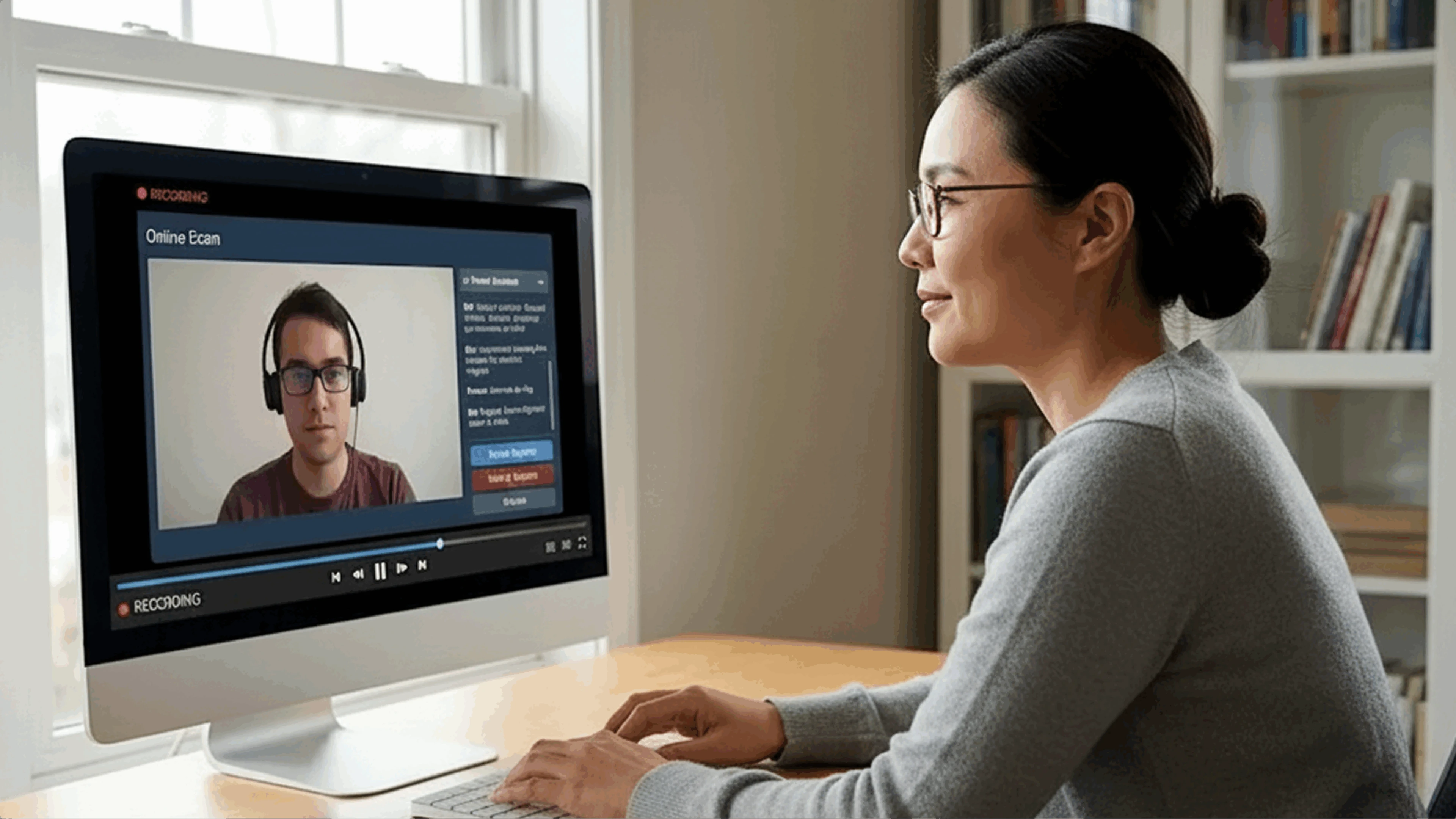
Why Hybrid AI + Human Review Delivers Fairer, More Accurate Proctoring
December 10, 2025
|
5 min read
AI-only proctoring is fast but context-blind, flagging neurodivergent behaviors, assistive technology, and environmental interruptions as suspicious. Human-only proctoring is fair but cannot scale consistently or cost-effectively. Hybrid AI plus human review combines the speed and pattern recognition of automation with the contextual judgment, empathy, and accountability that only people can provide. This post examines where each model falls short, what hybrid review actually delivers, and why it is becoming the baseline expectation for institutions that need proctoring to be both strong and humane.
As assessment programs continue to grow in scale and complexity, institutions are rethinking how proctoring decisions are made. Early AI-only solutions promised efficiency, but the reality often included something very different: false positives, confusing flags, and test-takers who felt judged by a system that didn’t understand their context. This AI-only proctoring trend has led to unnecessary administrative burden, increased support tickets, and growing distrust from test-takers.
On the other end of the spectrum, human-only proctoring doesn’t scale easily, can be inconsistent across reviewers, and often comes with higher costs and scheduling constraints.
That’s why more organizations are turning to a hybrid model, where AI handles detection at scale and human reviewers bring the context, nuance, and judgment needed to make fair, defensible decisions.
This hybrid approach blends the consistency and speed of automation with the nuance, empathy, and real-world judgment that only people can provide.
Why AI Alone Isn’t Enough
AI is very good at spotting patterns: movement in the frame, changes in lighting, new objects entering the screen, or shifts in gaze. It can scan hours of video in seconds and flag moments that stand out against the norm.
But exams don’t happen in lab conditions. They happen in real homes, workplaces, libraries, training centers, and shared spaces, with real life happening in the background.
AI alone struggles with:
- Involuntary movements: such as fidgeting, or sensory self-regulation
- Neurodivergent behaviors: like breaking eye contact, or using comfort objects
- Assistive technology: screen readers, alternative input devices, or captioning tools
- Environmental interruptions: family members walking by, doors opening, sudden noises
- Cultural differences: different norms around eye contact, gestures, or communication
- Shared environments: where other people may reasonably be nearby
What looks “suspicious” to an algorithm might simply be a student thinking, a parent checking on a child, or a worker taking an exam in the field.
When AI misreads these situations, it creates:
- unnecessary stress for test-takers
- extra work for administrators
- credibility questions about the results
That’s where human review becomes critical.
Why Human Alone Isn’t Enough
While human reviewers bring empathy, judgment, and contextual understanding to proctoring, relying on people alone creates a different set of challenges. Human-only models struggle with consistency, scalability, and efficiency, especially as assessment programs grow.
Human-only proctoring often leads to:
- Inconsistent interpretations: different reviewers may judge the same behavior differently
- Limited scalability: staffing constraints make it difficult to support large testing volumes
- Scheduling friction: requiring live availability for every exam window
- Higher operational costs: cost per session rises quickly when scaling human labor
- Slower turnaround times: reviews, escalations, and decisions depend on human bandwidth
- Greater potential for bias: unconscious assumptions may influence interpretations
And importantly, human-only oversight simply can’t match AI’s ability to scan long sessions efficiently, identify subtle environmental changes, or pattern-match at scale.
This creates an environment where:
- test-takers may be treated differently depending on who reviews their session
- administrators face delays waiting for manual review
- institutions absorb higher labor costs and logistical complexity
- stakeholders question the consistency and defensibility of evaluation outcomes
Human review is essential, but oftentimes not sufficient on its own.
Taken together, these two extremes paint a clear picture:
- AI alone is fast, but too rigid and context-blind to be fully fair.
- Humans alone are contextual and empathetic, but too limited and inconsistent to scale.
Institutions don’t need more of one or the other, they need both working together.
That’s where a hybrid AI + human review model comes in: AI handles detection at scale, while human reviewers bring the nuance, judgment, and fairness needed to make defensible decisions.
The Best of Both Worlds: Hybrid Review
A hybrid AI + human model brings together the strengths of both approaches while minimizing their limitations. Instead of choosing between speed or fairness, institutions get a workflow that delivers both, and at scale.
In a hybrid system, AI surfaces moments that may require attention, scanning for patterns and anomalies far faster than any human could. Then, trained human reviewers step in to evaluate those moments with the context, nuance, and judgment that AI simply cannot provide.
This creates a review process that is:
Faster and more efficient
AI handles the heavy lifting of detection, dramatically reducing the time humans spend reviewing full sessions or searching for notable moments.
More accurate and reliable
Human reviewers validate AI-identified events, preventing false positives and ensuring that only meaningful issues are flagged for institutions.
Fair for every test-taker
Whether a learner is using assistive technology, or simply nervous, human context helps ensure they aren’t penalized for normal or unavoidable behavior.
Transparent and defensible
Hybrid review creates clear audit trails that document both automated observations and human decisions, a critical requirement for accreditation, appeals, and internal accountability.
Consistent across sessions
AI provides consistency in detection, while humans ensure fairness in interpretation. Together, they reduce the variability and bias that can occur with human-only models.
Scalable for growing programs
AI enables institutions to handle large volumes of exams, while human reviewers are focused on meaningful, high-value decisions rather than routine monitoring.
By combining precision with empathy, hybrid review delivers a level of balance that neither AI nor humans can achieve alone. It’s a model built for modern assessments, diverse, distributed, and held to increasingly high expectations of fairness and trust.
Why Hybrid Review Is Becoming the New Baseline
More and more institutions are putting hybrid review on their “must have” list when evaluating proctoring solutions. Some of the biggest drivers include:
1. Reducing False Positives
False accusations or unnecessary investigations damage trust. Hybrid review reduces these incidents by ensuring that flagged behavior is double-checked by a human before it’s escalated or recorded as misconduct.
2. Supporting Diverse Learners
Assessment programs serve test-takers with a wide range of needs, backgrounds, and environments. Hybrid models are better equipped to ensure that neurodivergent learners, disabled test-takers, and individuals using assistive tools are treated fairly.
3. Improving Defensibility
When results are challenged, institutions need to show not just that a flag was raised, but that it was reviewed thoughtfully. Human-reviewed outcomes, supported by clear evidence, are easier to defend and explain.
4. Building Trust in the Process
When learners know there are humans involved, not just algorithms, they’re more likely to perceive the system as fair. That perception matters for participation, satisfaction, and long-term credibility.
5. Aligning With Evolving Policies
Many regulatory and professional bodies are now paying closer attention to how high-stakes decisions are made. Hybrid proctoring aligns with expectations for human oversight in processes that can impact credentials, careers, and educational pathways.
How Integrity Advocate’s Hybrid Approach Stands Apart
Hybrid review isn’t an add-on for Integrity Advocate, it’s at the core of how the system works.
Our approach:
- Uses AI to assist, not replace, human decision-making
- Ensures that all flagged moments receive human validation
- Keeps the focus on identity, participation, and policy-relevant behavior, not unnecessary surveillance
- Respects privacy by operating within a privacy-first, minimal-data framework
- Delivers clear, actionable reporting that teams can understand without needing to decode raw AI outputs
This combination of privacy-first design, seamless LMS integration, and hybrid AI + human review gives institutions what they’ve been asking for: integrity that is both strong and humane.
Building Fairness Into Every Review
Fairness shouldn’t depend on which exam a learner takes or which proctor happens to be on duty that day. It should be built into the system.
Hybrid AI + human review moves proctoring closer to that ideal by:
- balancing speed with judgment
- combining detection with understanding
- pairing integrity safeguards with respect for test-takers
For institutions, it means more reliable outcomes, fewer disputes, and a stronger foundation of trust. For learners, it means being seen as a person, not just a set of data points.
If your program is looking to reduce friction, elevate accuracy, and strengthen confidence in your assessment process, hybrid review is one of the highest-impact changes you can make. Book a Demo today!
{{post-cta}}

AI vs. Human vs. Hybrid Proctoring: Which Model Best Protects Exam Integrity?
October 9, 2025
|
5 min read
As online testing expands across education, certification, and compliance training, the choice between AI-only, human-only, and hybrid proctoring has real consequences for exam integrity, fairness, and organizational risk. This post breaks down all three models, their pros and cons, and when each is the right fit, concluding that hybrid proctoring delivers the best combination of efficiency, accuracy, and fairness for most modern assessment environments.
The Evolving Landscape of Online Exam Security
As online testing continues to expand across education, certification, and compliance training, choosing the right proctoring model has never been more important.
AI-only tools promise automation and scalability. Human-only options offer fairness and empathy. Hybrid models combine the best of both, but which one truly protects exam integrity?
This article breaks down the three dominant proctoring approaches, their pros and cons, and what to consider when choosing the right fit for your organization.
1. AI-Only Proctoring: Fast, Scalable, and Automated, but Imperfect
AI proctoring tools use algorithms to detect suspicious behavior automatically, from unusual head movements to multiple voices or unauthorized devices.
While these systems offer speed and scalability, they also raise concerns about accuracy and bias.
Pros:
- Monitors large numbers of exams simultaneously
- Automates flagging and reporting
- Reduces administrative workload
Cons:
- High false positive rates (lighting, gaze, or accessibility issues)
- Lacks human context and judgment
- Raises data privacy and fairness concerns
AI-only systems can be efficient but risk misinterpretation, which can reduced trust among test takers.
2. Human-Only Proctoring: Fair and Contextual, but Limited in Scale
Human proctors oversee exams via live or recorded video, making real-time decisions based on context and behavior.
This model prioritizes fairness, empathy, and human oversight, but introduces scalability and scheduling challenges.
Pros:
- Accurate, contextual decision-making
- Builds trust with test takers
- Reduces false flags and misunderstandings
Cons:
- Labor-intensive and difficult to scale globally
- Higher cost per exam
- Limited flexibility for asynchronous or on-demand testing
Human-only proctoring ensures fairness but struggles to keep pace with modern testing needs.
3. Hybrid (AI + Human) Proctoring: The Best of Both Worlds
Hybrid proctoring blends automation and human oversight to deliver accuracy, fairness, and scalability.
AI handles initial detection, while human reviewers verify each flagged event before reports are finalized. This ensures efficiency without sacrificing integrity.
Pros:
- Reduces false positives with human verification
- Scales efficiently across time zones
- Protects privacy and fairness
- Provides auditable, compliant reporting
Cons:
- Requires platform integration
- May introduce slight delays in review turnaround
Hybrid proctoring creates the balance today’s organizations need, efficient technology guided by human discretion.
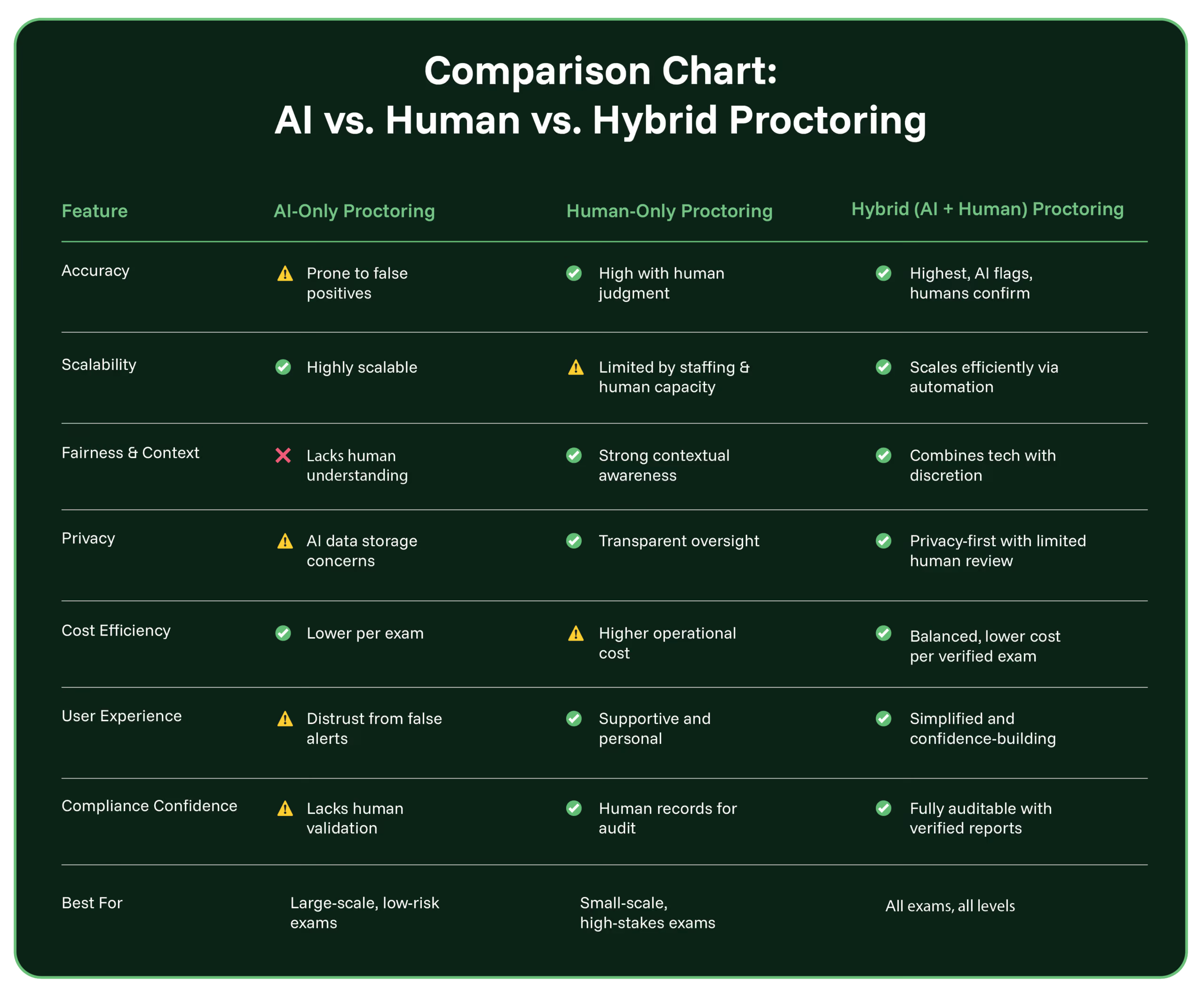
Verdict: Hybrid proctoring delivers the best combination of efficiency, accuracy, and fairness, meeting the evolving needs of modern learning and compliance environments.
When to Use Each Type of Proctoring (and When to Avoid It)
Choosing the right proctoring model isn’t just about features, it’s about fit. Here's when each approach works best, and when it might fall short.
AI-Only Proctoring
AI-only proctoring is a good fit for large-scale, low-stakes testing environments where speed and automation are priorities. It’s ideal for institutions delivering practice exams or formative assessments with minimal impact on final outcomes. If your team is constrained by staffing or budget, and real-time oversight isn’t required, AI-only can offer a fast, lightweight solution.
However, AI-only solutions are risky in high-stakes scenarios like certification, compliance, or licensure exams, especially where fairness, accessibility, and privacy are key concerns. These systems can generate false flags and lack the human context needed to distinguish genuine misconduct from harmless behavior.
Human-Only Proctoring
Human-only proctoring excels in small-group, high-stakes testing scenarios where personal interaction, empathy, and real-time judgment matter most. It's particularly useful for live, synchronous exams or specialized formats like oral exams, interviews, or hands-on assessments. If trust, fairness, and human connection are top priorities, a fully human approach ensures every test-taker is treated with context and care.
That said, this model becomes difficult to scale across large populations or global programs. It also presents challenges for asynchronous testing and tends to be more expensive due to staffing and scheduling demands. Organizations needing rapid turnaround or flexible exam windows may find this model limiting.
Hybrid Proctoring (AI + Human Review)
Hybrid proctoring combines the speed and scalability of AI with the fairness and context of human review, making it ideal for most modern assessment environments. It works especially well for mid- to high-stakes exams delivered at scale, such as workforce certification, compliance training, or higher education finals. Hybrid models support asynchronous access and bring-your-own-device testing, while still delivering human-verified, audit-ready results.
The main limitation is that some hybrid models may involve slight delays between the test and final reporting, depending on review turnaround time.
Why Hybrid Models Are the Future
Organizations are no longer choosing between technology and trust — they’re demanding both. Hybrid proctoring empowers institutions to deliver secure, privacy-compliant, and credible assessments without friction for test takers.
By combining automation and human verification, administrators get:
- Fewer false flags and student disputes
- Stronger audit trails and compliance documentation
- A smoother, more confident test-taking experience
How Integrity Advocate Sets the Standard
Integrity Advocate’s hybrid approach is designed around human-first, privacy-protected verification.
- No software installs required
- Works on any device or browser
- AI-driven detection verified by expert human reviewers
- Transparent, auditable reports administrators can trust
Integrity Advocate’s hybrid proctoring ensures fairness, compliance, and confidence in every assessment.
“Integrity Advocate integrates easily with our current system. It runs smoothly and is aesthetically pleasing; it meets the high standard we have for all our systems. It is also very effective at proctoring while not being too invasive; our users feel comfortable using it. Integrity Advocate strikes the right balance of integrity and privacy, which is hard to find!”
Ready to find the balance between automation and integrity?
Request a Demo to see how Integrity Advocate’s hybrid model redefines online exam security.
{{post-cta}}

AI-Powered Online Proctoring Software Needs Human Oversight
September 16, 2025
|
5 min read
AI-powered proctoring can monitor at scale, but it cannot understand context, weigh consequences, or defend a certification decision to a regulator or accreditor. In safety-critical industries where a missed harness check or a wrongly credentialed healthcare worker can cost lives, the blind spots of automated-only proctoring become serious liabilities. This post examines what AI cannot do in high-stakes assessment, what standards like ANSI/ASSP Z490.1-2024, ISO/IEC 17024, and NCCA require in terms of defensibility and human oversight, and why the right model is AI plus human judgment rather than either alone.
Automation promises speed. But in compliance, speed without accuracy can be devastating.
AI is now woven into training and certification. It monitors test-takers, flags anomalies, and produces reports at a pace no human could match. For compliance leaders facing relentless pressure, it looks like the ideal solution: scalable, efficient, impartial.
But here’s the catch: AI doesn’t grasp the stakes of being wrong.
- A missed harness check on a construction site isn’t just noncompliance, it can mean a fatal fall.
- An overlooked question in food safety training isn’t just a technicality, it can trigger a life-threatening allergic reaction.
- A nurse credentialed without proper oversight isn’t simply a paperwork error, it’s a direct risk to patient safety.
AI-powered online proctoring software can detect patterns, but it can’t weigh consequences. It can’t tell the difference between distraction and dishonesty. It can’t stand in front of an accreditor or regulator and defend a decision.
And compliance leaders know the stakes. 64% of frontline workers say injuries they’ve experienced or witnessed could have been prevented with better training, according to a YouGov survey of more than 2,000 workers in Australia, the UK, and the US. When proctoring systems prioritize speed over judgment, gaps spill from the classroom into the workplace.
{{post-stat-highlight}}
That’s why proctoring can’t be left to automation alone. Judgment, accountability, and defensibility require a human in the loop.
AI’s blind spots
For all its processing power, AI often misses the context, fairness, and consequences behind the data.
Pattern vs. context
AI can spot anomalies, but it can’t understand people. To the algorithm, a student glancing away as their child enters the room looks no different than someone searching for an answer. Without human judgment, honest learners get flagged, reputations suffer, and trust in the system erodes, all while true violations can still slip by unnoticed.
Risks of misjudgment
The real danger isn’t just inaccuracy, it’s the consequences. A nursing candidate wrongly flagged can lose months of progress, along with trust in the system meant to support them. Meanwhile, a missed violation on a commercial driving exam could place an unqualified driver behind the wheel of your company’s vehicle, endangering both reputation and public safety.
Bias and accessibility
AI models are not neutral. From lighting conditions to facial recognition inaccuracies, automation can inadvertently disadvantage test-takers with disabilities, those in non-standard testing environments, or individuals from diverse cultural backgrounds. This creates inequities that undermine the fairness of certification processes. At Integrity Advocate, we work to eliminate these inequities, making the certification process seamless, accessible, and fair for every test-taker.
No sense of consequences
Perhaps the greatest blind spot is this: AI doesn’t “understand” what a mistake means. It cannot connect a failed harness safety check to a potential fall on a job site. It doesn’t grasp that mishandled food safety could trigger an allergen outbreak. Without that ethical and practical awareness, AI remains a tool that must be guided by human oversight.
Certifications in focus: why proctoring integrity matters
The stakes of proctoring reach far beyond academia. They’re practical and sometimes life-or-death.
Consider a few high-stakes examples:
- Nursing exams and clinical credentials ensure healthcare workers can safely treat patients.
- Electrical licenses confirm that workers can install and maintain systems without risking fires or electrocution.
- Commercial Driver’s Licenses (CDL) certify drivers who transport goods and passengers across public roads.
- ServSafe and OSHA certifications guard against foodborne illness and workplace hazards.
These certifications aren’t just personal milestones. They validate competence in roles that protect lives and communities. Without trustworthy proctoring, credentials lose credibility. Organizations risk liability, and the public loses trust in the professionals meant to safeguard them.
AI-Only Proctoring Falls Short
When the stakes are high, oversight must be more than automated pattern recognition. AI can monitor, record, and flag, but it cannot fully understand context or consequences. Relying on AI alone risks undermining the very certifications designed to protect lives and communities.
ANSI and accreditation frameworks: compliance by design
The updated ANSI/ASSP Z490.1-2024 standard sets clear expectations for safety, health, and environmental (SH&E) training.
For compliance leaders, a few key takeaways stand out:
- Reliability and fairness are non-negotiable.
- Oversight and defensibility must be built into training and assessment.
- Documentation and accountability are essential in the event of an audit or incident.
These requirements go beyond what automation alone can provide. Standards demand human verification, ethical review, and the ability to defend every certification decision.
Beyond ANSI: ISO and NCCA
International standards like ISO/IEC 17024 and U.S. frameworks like the National Commission for Certifying Agencies (NCCA) reinforce the same principle: defensible certification requires human oversight. Without it, organizations risk failed audits, loss of accreditation, and legal exposure.
Hybrid Online Proctoring: AI Detection + Human Discretion
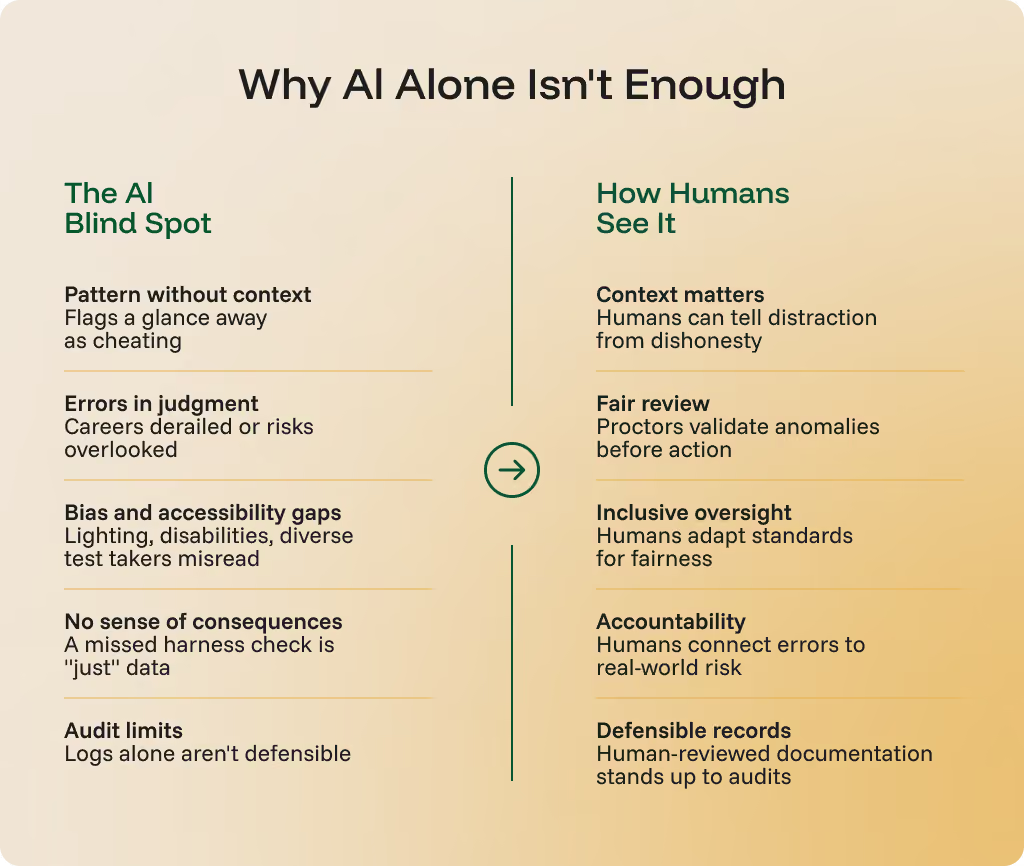
The answer is not to reject AI, but to integrate it thoughtfully. The most effective approach is AI plus human oversight, where technology enhances efficiency, but people ensure fairness, context, and compliance.
Scalable monitoring with human review
AI can monitor at scale, flagging potential anomalies. But those red flags should be reviewed by trained human proctors who can interpret context and make defensible decisions.
Audit trails and documentation
Human oversight is essential for building robust audit trails. When compliance checks or regulatory audits arise, organizations must show that their proctoring process was fair, valid, and defensible. Documentation reviewed and validated by people is far more credible than machine logs alone.
Automation accelerates, human judgment protects
AI has transformed training and monitoring with unprecedented speed and scale. Yet in safety-critical industries, automation is a tool, not a safeguard. True protection comes from human judgment, ethical oversight, and alignment with compliance standards.
With standards like ANSI/ASSP Z490.1-2024 raising the bar for defensibility, organizations must recognize that proctoring isn’t just a technical step, it’s a compliance-critical safeguard that protects lives, preserves trust, and ensures training fulfills its purpose.
Smart systems drive efficiency. Human oversight delivers safety. Together, they make compliance simple, scalable, and defensible.
Online proctoring software built for compliance and trust
When compliance is defensible, organizations, and the people they serve, are safer. That’s why proctoring must go beyond automation.
At Integrity Advocate, we combine AI efficiency with human oversight to ensure every training program is verifiable, fair, and aligned with the latest standards. That means:
- Confirmed identities
- Monitored participation
- Defended credentials
No guesswork. No blind spots. Just compliance you can stand behind.
Ready to safeguard your compliance? Let’s leverage the combined power of AI and human oversight, together.
{{post-cta}}
Frequently asked questions
Learn more about how AI and human review work together to deliver fair, consistent, and defensible assessment outcomes.
AI is excellent at identifying unusual activity, but it can't fully understand context or apply your program's policies. Integrity Advocate combines AI with trained human reviewers to deliver fair, consistent, and documented assessment outcomes.
Yes. Every AI-flagged event is reviewed by a trained specialist before a final assessment outcome is recorded. Human reviewers evaluate the context, apply your organization's policies, and document the rationale behind every decision.
Automated systems can flag normal behavior, such as a participant briefly looking away, changes in lighting, or someone entering the room. Human reviewers evaluate these events in context, helping distinguish legitimate situations from actual policy violations.
No. AI handles continuous monitoring and detection at scale, while trained reviewers efficiently verify flagged events and identity checks. This hybrid approach delivers timely results without sacrificing fairness or accuracy.
Human review is built into every Integrity Advocate product tier. Every identity verification, AI flag, and assessment outcome is reviewed and verified by trained specialists before results are finalized.

See what happens when AI meets human judgment.
See how Integrity Advocate combines AI with trained human reviewers to deliver fair, consistent, and defensible assessment outcomes.
10M+
Total sessions proctored
65+
Languages supported
98%
Client retention rate