September 3, 2026
|
4
min read
What Happens After an Exam Flag? Inside Human Review
Most proctoring platforms stop at the flag. Integrity Advocate does not. This post walks through what a trained reviewer actually looks at, how a decision gets documented, and what happens if a test taker disputes the outcome, so admins know exactly what stands behind every result.


An automated flag is not a decision. It is a signal that something in a session looked different from expected, a glance away from the screen, a second voice in the room, a browser tab that opened at the wrong moment. What happens next is where most platforms stop talking, and it is exactly where the real work of assessment security begins.
For programs issuing results that carry weight, whether that is a certification, a compliance sign-off, or an academic grade, the review process behind a flag matters as much as the flag itself. Here is what actually happens.
What triggers a flag during an online exam?
Flags come from a mix of signals collected during the session: unusual movement, a change in lighting or audio, a browser event, an identity mismatch at check-in. None of these signals mean a test taker did anything wrong. They mean the system noticed something worth a second look.
This is the point where the two approaches to online proctoring diverge. A platform built on automated decisioning treats the flag as close to final, sometimes reducing a result to a risk score with little context behind it. A platform built on human review treats the flag as the start of a process, not the end of one.
What does a human reviewer actually look at?
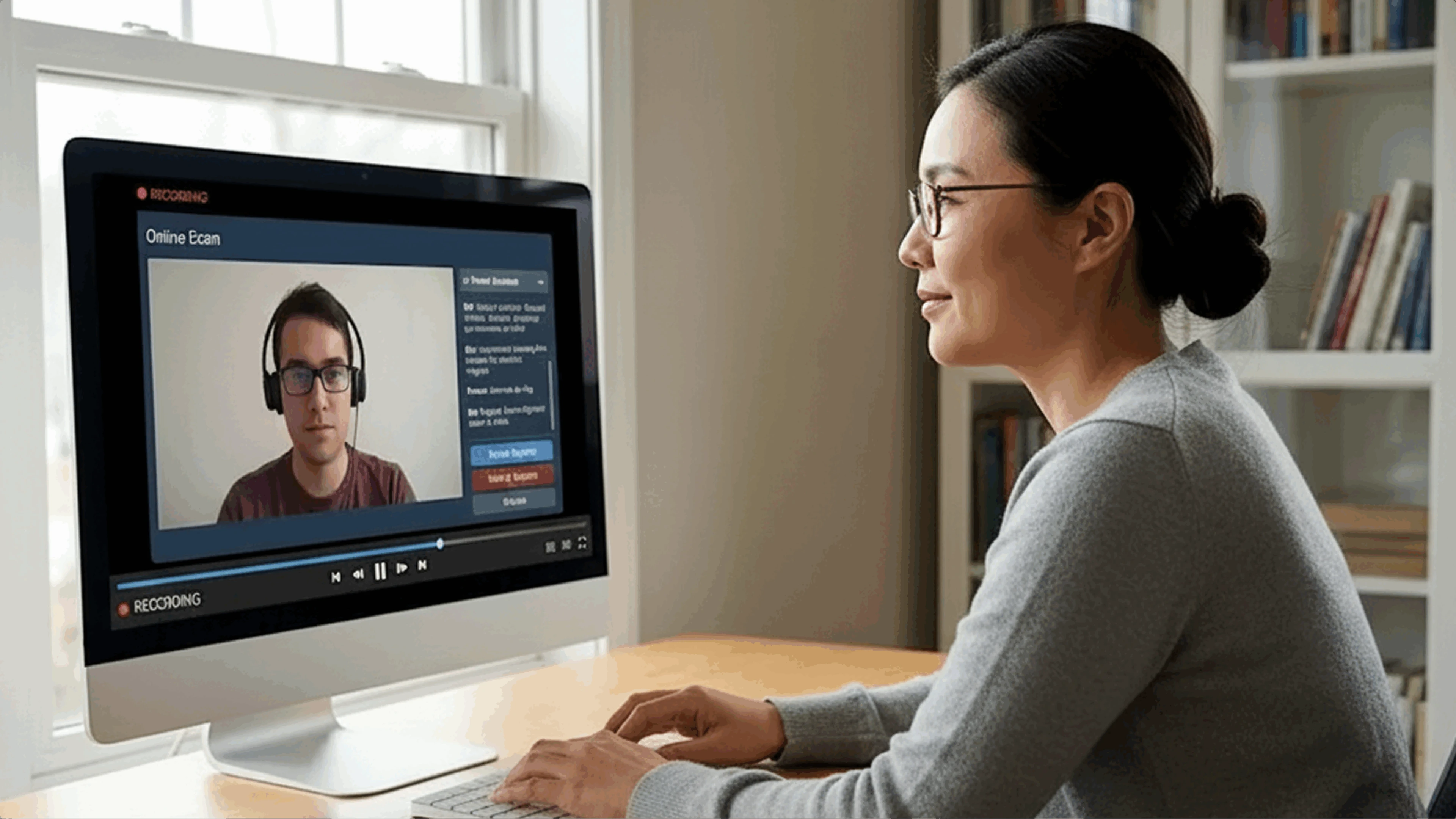
Once a session is flagged, a trained reviewer opens the recording alongside the full context of the exam: the timestamp of the flag, the identity verification completed before the session started, and the behavior immediately before and after the triggering moment.
The reviewer is looking for the difference between a pattern that constitutes a violation and a pattern that does not, something an algorithm has no way to judge. A test taker glancing off screen to think through a problem looks identical to a system as a test taker glancing at a second monitor. A person can tell the difference in seconds. That distinction is the entire value of putting a trained reviewer behind every flag before any outcome is issued, not just the flags a system considers high risk.
{{post-stat-highlight}}
How is a review decision documented?
Every reviewed session results in a written outcome, not a number. That record includes what was flagged, what the reviewer observed, and the reasoning behind the final determination. This is the piece that turns a proctoring tool into a source of evidence a program can actually stand behind.
When a result gets challenged later, whether by a student, a candidate, an employer, or a regulator, the program needs more than a score. It needs a record that shows a real person looked at the specific moment in question and reached a specific, explainable conclusion. That record is what makes a result defensible.
What happens if a test taker disputes the outcome?
A documented review gives programs somewhere to start when a result is questioned. Instead of pointing to an automated flag and hoping it holds up, an administrator can point to a reviewed session, a timestamped recording, and a reasoned explanation. That is the difference between a decision a program can explain and one it can only report.
This matters most in the moments programs plan for least: an appeal from a student, a compliance audit from a regulator, or a challenge to a certification result years after the exam took place. A defensible process is only defensible if it holds up when someone actually asks.
How is this different from a fully automated system?
Fully automated systems are fast and they scale easily, but a score with no context is difficult to defend and carries real fairness risk. In-person testing centers solve the trust problem with human judgment, but they cannot scale and the cost is often prohibitive for programs running at volume.
Human review built into every session, not offered as a premium add-on, is what lets a program scale online without losing the judgment that makes a result defensible. As AI-assisted answer generation makes behavioral flags harder to interpret on their own, that judgment is not a nice-to-have. It is the piece of the process that automated systems cannot replicate.
Fair, trustworthy, and defensible is not a tagline. It is what a documented, human-reviewed process actually produces, session by session, for every program that runs on it.
{{post-cta}}
A trained reviewer examines every flagged session, not just the ones an algorithm scores as high risk.
Keep reading
Why Hybrid AI + Human Review Delivers Fairer, More Accurate Proctoring
December 10, 2025
|
6
min read
AI-only proctoring is fast but context-blind, flagging neurodivergent behaviors, assistive technology, and environmental interruptions as suspicious. Human-only proctoring is fair but cannot scale consistently or cost-effectively. Hybrid AI plus human review combines the speed and pattern recognition of automation with the contextual judgment, empathy, and accountability that only people can provide. This post examines where each model falls short, what hybrid review actually delivers, and why it is becoming the baseline expectation for institutions that need proctoring to be both strong and humane.

AI-Only Proctoring Has a False Positive Problem. Here’s What That Costs Your Program.
June 24, 2026
|
5
min read
AI-only proctoring flags behavior. It doesn't evaluate it. When automated systems skip human review, wrongful invalidations follow, and programs are left with outcomes they can't defend.

Admin-Ready Results: Why Audit-Ready Reporting Matters More Than Ever in Online Proctoring
December 16, 2025
|
3
min read
For many administrators, the most time-consuming part of secure assessment delivery happens after the exam: reviewing sessions, sorting through flags, watching recordings, and trying to turn raw data into decisions the team can stand behind. Most proctoring tools generate a lot of data but very little clarity, leaving administrators to manually reconstruct context that should already be documented. This post examines what administrators actually need from proctoring reporting, why unclear results become a bottleneck as programs scale, and how audit-ready reporting shifts proctoring from a reactive process to a streamlined one.
Frequently asked questions
Find answers to the most commonly asked questions from our clients.
A flag is triggered by a signal during the session, such as unusual movement, a change in audio or lighting, or a browser event. It is not a judgment. It is a prompt for a trained reviewer to take a closer look.
Yes. A trained reviewer examines every flagged session before any outcome is issued, not only the sessions an algorithm scores as high risk.
Each reviewed session produces a written record that includes what was flagged, what the reviewer observed, and the reasoning behind the final determination.
Programs using human-reviewed proctoring have a documented record to draw on when a result is questioned, including the reviewer's observations and reasoning, rather than only an automated flag.
An automated system can identify that something looked unusual. It cannot determine whether that pattern constitutes a violation. A trained reviewer applies context and judgment before any decision is made.