
ACCESSIBILITY & GLOBAL SCALE
Secure assessments for every participant, everywhere
Deliver accessible assessment experiences that support participants across languages, locations, and accessibility needs while maintaining assessment integrity.

ACCESSIBILITY BY DESIGN
Remove barriers, not opportunities
Accessibility is about creating fair opportunities for every participant. Integrity Advocate is designed to support accessible assessment experiences while helping organizations maintain the integrity of their programs.
GLOBAL BY DEFAULT
Reach participants around the world
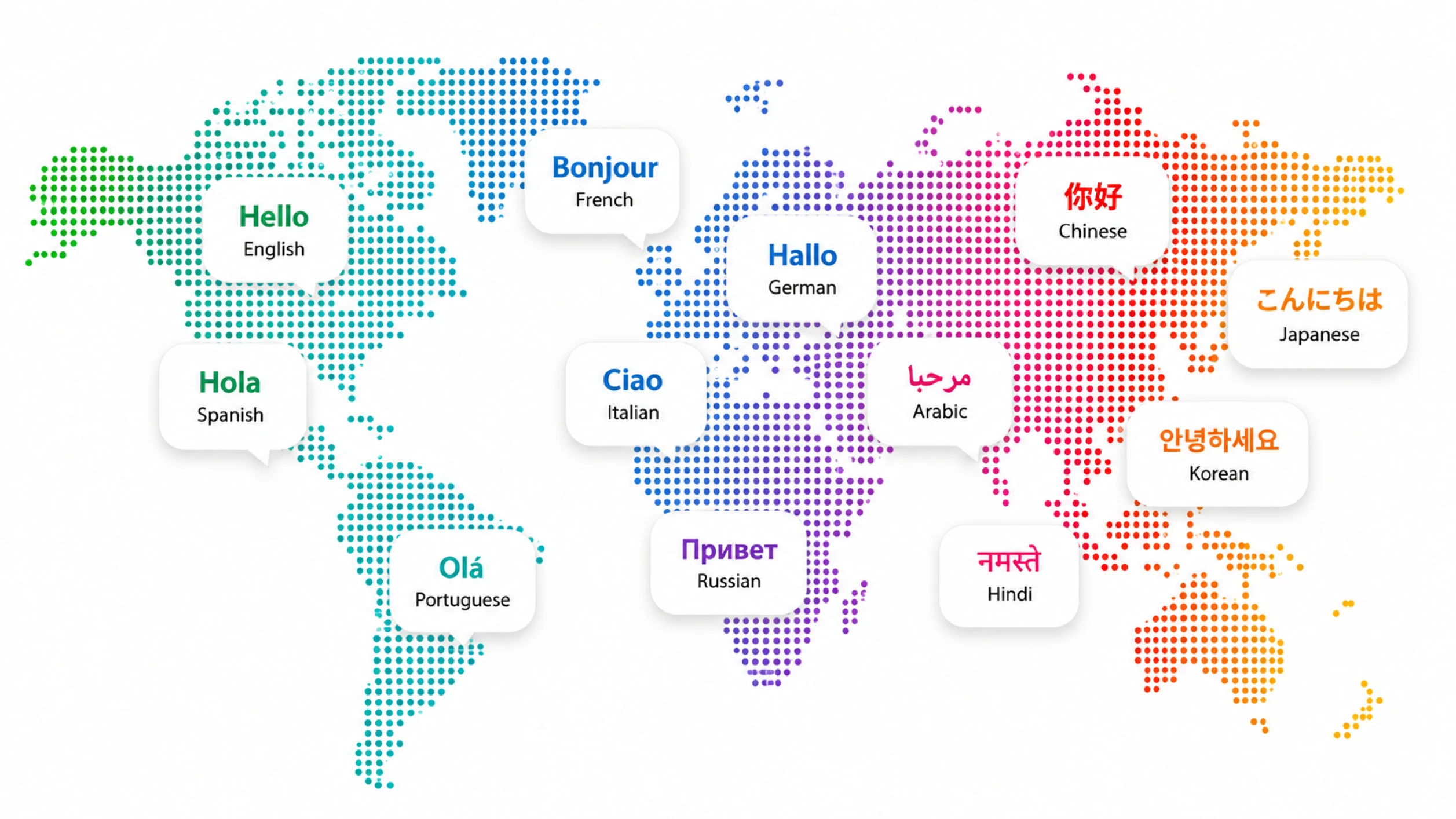
Learning and certification happen around the world. Integrity Advocate supports participants in more than 65 languages, helping organizations deliver consistent experiences across countries, cultures, and regions.
Whether your participants are testing from campus, home, or the field, they receive the same secure, browser-based experience.
DESIGNED FOR REAL-WORLD PARTICIPANTS
Expanding access strengthens every program
Removing technical barriers creates a better experience for everyone involved; from participants taking an assessment to the administrators and IT teams supporting it.
Participants
Accessible experiences that reduce unnecessary barriers, and anxiety before testing starts.
Administrators
Support accommodations without creating additional complexity.
IT Teams
Deliver inclusive assessments without deploying specialized software.
Organizations
Expand access while maintaining consistent assessment standards.
INCLUSIVE BY DESIGN
Accessibility and security work together
Integrity Advocate helps organizations remove unnecessary barriers while maintaining secure, defensible assessment experiences.
Expand access without adding complexity
Inclusive assessments create opportunities for more participants while helping organizations deliver consistent, defensible assessment experiences around the world.
Support learners and candidates with different accessibility needs and language preferences.
Deliver consistent assessment experiences across countries and regions.
Reduce unnecessary technical barriers before testing begins.
Expand your assessment programs without increasing administrative complexity.
MORE TO EXPLORE
Continue exploring ways Integrity Advocate removes complexity
Explore the capabilities and design principles behind a better assessment experience.
Verified human review
AI identifies patterns. Trained specialists provide context and make fair, defensible decisions.
Privacy by design
Collect only what's needed, never sell participant data, and give organizations control over retention.
Works on any device
Deliver secure assessments across laptops, Chromebooks, tablets, and mobile devices.
Accessibility & global scale
Create inclusive assessment experiences that support participants around the world.
#1 Ease of Use
Purpose-built to reduce support requests and simplify every assessment.
Seamless integrations
Launch assessments directly from the LMS and learning platforms you already use.
WHAT OUR CLIENTS SAY
"Affordable, Easy-to-Use Proctoring Solution - I really appreciate that Integrity Advocate allows for secure remote proctoring without the need for students to download any software. This makes it much more accessible and user-friendly. The software also offers this at an affordable price while maintaining secure proctoring capabilities."
Resources on accessible, global assessment delivery
Explore insights on creating more inclusive assessment experiences while maintaining security, fairness, and program integrity.

Modern Proctoring Requires Anytime, Anywhere Access
December 15, 2025
|
5 min de lecture
Online assessments no longer happen in controlled environments. They happen at kitchen tables and job sites, on personal phones and employer-managed laptops, across time zones and bandwidth conditions that institutions cannot control. Proctoring solutions built for a single, standardized testing environment are increasingly out of step with how people actually learn, train, and certify. This post examines the reality of modern testing environments, why device-agnostic and low-bandwidth-optimized design is now a baseline expectation, and how flexible access strengthens rather than weakens assessment integrity.
Online assessments don’t live in neat, controlled environments anymore. They happen at kitchen tables and job sites. On desktops, laptops, tablets, and phones. On personal devices, employer-managed systems, shared computers, and whatever hardware learners have access to in the moment. They happen across time zones, bandwidth conditions, and environments institutions simply can’t control.
As online assessment continues to scale, one expectation has become clear: proctoring has to work anytime, anywhere, without putting extra hurdles in front of learners or administrators.
That reality is reshaping how institutions think about proctoring and what they expect from the tools they choose.
The Reality of Modern Testing Environments
The idea of a single, standardized testing environment no longer matches how people actually learn, train, and certify today.
As we highlighted in our 2025 Year-in-Review, assessment programs are expanding well beyond traditional academic settings into workforce training, compliance programs, professional certification, and global continuing education initiatives.
That expansion brings variety. Learners might be using an employer-issued laptop one day and a personal tablet the next. They might be testing from home, a library, a training center, or a shared workspace. Some environments are quiet and stable, others are not.
Proctoring solutions that only work reliably in narrow, ideal conditions quickly start to feel out of step with this reality.
Learners Are Using More Than One Device
The need for device-agnostic access isn’t new. It reflects how people already interact with digital tools in everyday life.
A significant portion of adults rely on mobile devices as a primary or frequent way to access online services, particularly in workforce and continuing education settings. In practice, that means learners often move between desktops and laptops at home, employer-managed devices at work, tablets or Chromebooks for flexibility, and mobile devices when other options aren’t available.
When proctoring systems assume a single device type, friction shows up immediately, often before the exam even begins.
Mobile and Remote Learning Continue to Expand
Expectations around anytime, anywhere access are also shaped by how learning itself has evolved.
Research from EDUCAUSE shows that learners increasingly expect educational tools to work seamlessly across devices and environments, with mobile access playing a growing role in how learners engage with content and assessments.
This is especially true in workforce and professional education, where assessments are often completed outside traditional classrooms and on non-standard devices. In those settings, rigid technical requirements aren’t just inconvenient, they can be a barrier to participation.
Bandwidth Variability Is a Reality
Even with widespread internet access, consistent bandwidth isn’t guaranteed.
Proctoring solutions that rely on heavy downloads, constant high-resolution streaming, or strict technical requirements tend to struggle when connectivity isn’t perfect. That can lead to delayed starts, dropped sessions, or failed exams, none of which have anything to do with academic integrity.
Integrity Advocate’s browser-based, low-bandwidth-optimized approach is designed to keep exams running smoothly, even when network conditions are less than ideal.
Why Rigid Proctoring Models Fall Short
Many traditional proctoring models were built around a single use case: a learner on a personal desktop or laptop, in a quiet space, with strong internet connectivity. That assumption no longer holds.
Rigid systems often:
- fail on mobile or tablet devices
- struggle with locked-down or managed hardware
- break down in low-bandwidth environments
- require workarounds for real-world testing conditions
- increase reliance on technical support
These limitations tend to hit workforce learners, global candidates, and those without access to ideal testing setups the hardest.
Anytime, Anywhere Access Reduces Support Burden
Institutions are increasingly prioritizing proctoring solutions that reduce friction on exam day and lower the volume of support requests.
Programs consistently report that:
- fewer device restrictions lead to fewer failed exam launches
- browser-based access reduces “how do I start?” tickets
- consistent access across environments improves completion rates
Anytime, anywhere access isn’t just better for learners. It’s operationally better for administrators, too.
How Integrity Advocate Supports Anytime, Anywhere Testing
Integrity Advocate was built for modern assessment environments, not idealized ones. Our platform supports anytime, anywhere access by:
- running entirely in the browser, with no downloads or plugins
- supporting desktops, laptops, tablets, and mobile devices
- functioning reliably across varying bandwidth conditions
- integrating directly into existing LMS platforms
- reducing technical dependencies that cause exam-day issues
This flexibility allows institutions to scale assessments confidently, without forcing learners to adapt to rigid technical constraints.
Flexibility Strengthens Integrity
It’s easy to assume that tighter technical restrictions automatically lead to stronger exam integrity. In practice, the opposite is often true. When learners struggle just to access an exam, anxiety rises, trust drops, and compliance suffers. When the testing experience works smoothly, learners can focus on demonstrating what they know.
Flexible access strengthens integrity by:
- reducing stress at exam launch
- increasing participation and completion rates
- creating more consistent testing conditions
- enabling clearer, more defensible outcomes
Integrity is strongest when systems remove friction, not add it.
Conclusion
As online assessment continues to evolve, anytime, anywhere access has become a baseline expectation, not a differentiator.
Proctoring solutions that only work in narrow conditions will struggle to scale. Those designed for real-world diversity will continue to earn trust from institutions and learners alike. Modern proctoring has to meet learners where they are, on the devices they use, in the environments they test.
Schedule a demo to learn how Integrity Advocate supports flexible, reliable online assessment.
{{post-cta}}

Accessibility Is the Foundation of Fair Online Assessment
December 12, 2025
|
5 min de lecture
Fair online assessment is not just about catching cheating. It is about whether the testing environment works consistently and equitably for every learner. When proctoring systems assume narrow definitions of normal behavior, perfect lighting, steady eye contact, high bandwidth, single devices, they do not just create friction. They create inequity. This post examines why accessibility has become central to assessment integrity, where AI-only approaches fail diverse learners, what inclusive proctoring actually requires, and how a human-backed model is the only approach that can interpret context fairly across the full range of real-world assessment conditions.
Fair online assessment isn’t defined only by how well you catch cheating, it’s defined by whether the testing environment is consistent, inclusive, and workable for every learner. A proctoring experience can be technically secure and still fail the moment it meets real life.
Because real assessments don’t happen in perfect conditions. They happen on aging laptops and shared devices. On unstable internet connections. In homes, offices, libraries, and job sites. They happen with learners who use assistive technology, require accommodations, speak different languages, or simply don’t have access to an ideal testing environment.
When proctoring systems assume a narrow definition of “normal”, perfect lighting, steady eye contact, minimal movement, high bandwidth, they don’t just introduce friction. They introduce inequity.
That’s why accessibility and inclusion aren’t secondary considerations in online assessment anymore. They are foundational to fairness, defensibility, and trust.
Why Accessibility Has Become Central to Assessment Integrity
As online testing expands across education, credentialing, and workforce training, institutions are being held to higher expectations around who assessments serve, and how.
Institutions no longer limit accessibility to formal accommodations or compliance checklists. Accessibility now includes whether an assessment system genuinely works for the full range of learners expected to participate.
The Web Content Accessibility Guidelines (WCAG) emphasize that digital systems must be perceivable, operable, understandable, and robust for all users, regardless of ability or environment.
In the United States, the Americans with Disabilities Act (ADA) and Section 508 continue to shape how institutions evaluate digital tools, including assessment platforms.
Internationally, organizations such as UNESCO have highlighted that inclusive access to digital learning and assessment is essential for equitable education and workforce participation.
These frameworks make one thing clear, accessibility is not optional, and it cannot be bolted on after the fact.
The Real-World Accessibility Gap in Traditional Proctoring
In contrast, many early online proctoring systems were built for controlled environments, strong internet, quiet rooms, single devices, and highly standardized behavior. But that model no longer reflects how people learn or test.
Today’s learners take assessments:
- in shared homes or workplaces
- on employer-managed or restricted devices
- with inconsistent bandwidth
- using assistive technologies such as screen readers
- across languages, cultures, and time zones
- while managing disabilities or neurodivergent needs
When proctoring systems aren’t designed for this reality, AI-only proctoring systems often misinterpret normal human behavior as suspicious. The result is unnecessary flags, increased anxiety, and outcomes that feel unfair, not because integrity was compromised, but because the system lacked flexibility.
Research from Educational Testing Service (ETS) reinforces this point, assessment validity depends not only on test design, but on the conditions under which tests are delivered. When delivery introduces barriers, fairness suffers.
Why AI-Only Approaches Often Exacerbate Accessibility Issues
Automation can be valuable in assessment security, but accessibility challenges often fall outside predictable patterns.
AI-only proctoring systems frequently struggle to interpret:
- involuntary or self-regulating movement
- neurodivergent behaviors
- breaks in eye contact
- assistive device use
- environmental interruptions
Without context, these signals are easily misclassified. These systems often force learners to defend themselves against automated decisions.
This doesn’t just harm the test-taker experience. It erodes trust in the assessment itself.
Accessibility requires context, and context requires human judgment.
Inclusive Proctoring Requires a Human-Centered Model
As a result, inclusive assessment systems are built on flexibility, restraint, and interpretation, not rigid enforcement.
That’s why institutions are increasingly prioritizing proctoring solutions that:
- support assistive technologies
- accommodate neurodivergent behaviors
- function reliably in low-bandwidth environments
- support multilingual learners
- adapt to shared or unpredictable testing spaces
- allow accommodations without introducing complexity
A human-backed review model plays a critical role here. When AI is used to assist detection, not replace judgment, behavior can be interpreted within real-world context instead of reduced to binary flags.
This approach leads to:
- fewer false positives
- more equitable outcomes
- clearer, more defensible decisions
- reduced stress for learners
- lower support burden for administrators
How Integrity Advocate Supports Accessibility and Inclusion
Integrity Advocate was designed with accessibility and inclusion as core principles, not add-ons.
Our platform supports inclusive testing by:
- pairing AI detection with human review, ensuring context is considered
- minimizing unnecessary surveillance that can disadvantage certain learners
- supporting low-bandwidth environments
- offering multilingual capabilities
- enabling accommodations without complex technical configurations
- integrating directly into existing LMS workflows to reduce cognitive and technical barriers
This human-first, privacy-first approach helps ensure assessments are secure without being exclusionary.
Importantly, inclusive proctoring benefits all learners, not just those with formal accommodations. When systems are designed to work for diverse needs and environments, completion rates improve, disputes decrease, and confidence in outcomes increases.
Inclusion Strengthens Integrity
There is a common misconception that accessibility and security are competing priorities. In practice, they reinforce one another.
When learners feel respected by the assessment process:
- compliance improves
- anxiety decreases
- engagement increases
- misconduct becomes easier to identify
- decisions become more defensible
Integrity is strongest when systems are designed for people, not against them.
Looking Forward
As online assessment continues to evolve, accessibility and inclusion will remain central to how institutions evaluate proctoring solutions.
Tools that only function in ideal conditions, or rely on rigid automation without human context, will struggle to meet rising expectations around fairness, equity, and trust.
Learn More - Schedule a demo to learn how inclusive proctoring can work in your environment
{{post-cta}}
Online Proctoring and Accessibility: How the Industry Is Failing People with Disabilities
April 14, 2022
|
5 min de lecture
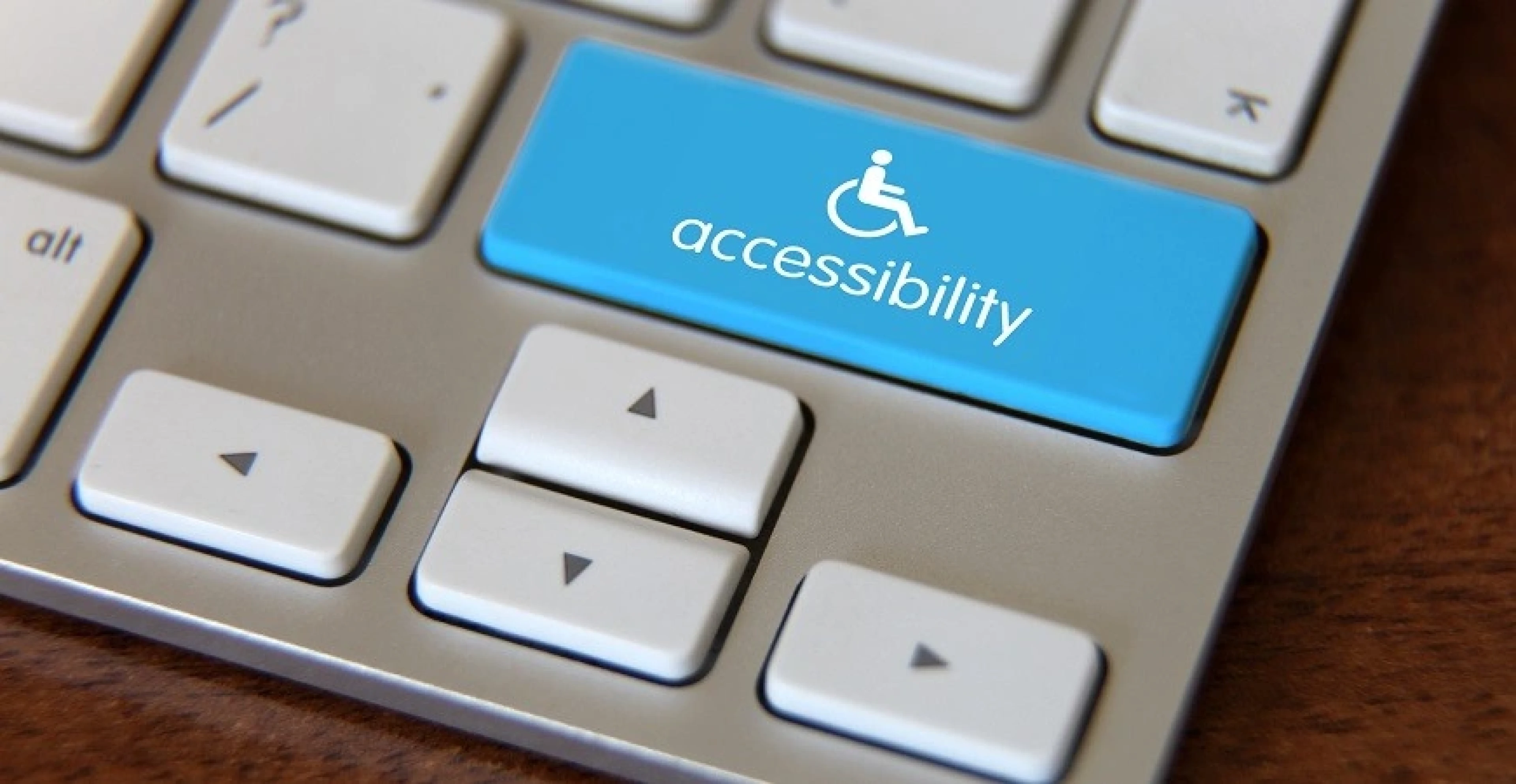
Online proctoring platforms routinely fail test takers with disabilities through room scan requirements, biometric systems that flag facial differences, and eye tracking that penalizes neurological variation. This post examines where the industry gets it wrong, what accessibility legislation now requires, and how Integrity Advocate is built to assess every test taker fairly, with WCAG 2.1 AA compliance and human review on every flagged session.
Most online proctoring platforms were not designed with disabled test takers in mind. That's not an assumption, it shows up in the product.
Some platforms require test takers to physically lift their monitor and scan the room. Others use AI-based facial monitoring that flags people with facial deformities as suspicious. Eye-tracking systems penalize unconventional eye movements — the kind that are entirely normal for people with certain neurological or visual conditions. These aren't edge cases. They're design failures that exclude a significant portion of the population from participating in online assessment at all.
As accessibility legislation tightens globally and courts begin issuing financial penalties, proctoring providers can no longer treat accessibility as optional. This post looks at what's at stake, where the industry is falling short, and what responsible design actually looks like.
Why Accessibility in Online Proctoring Matters
A disability is broadly defined as a physical or mental impairment that substantially limits one or more major life activities. The scale of the population affected is significant:
- The World Health Organization estimates that over 1 billion people globally live with some form of disability
- An estimated 285 million people worldwide experience visual impairment
- Nearly 2.5 billion people are projected to have some degree of hearing loss by 2050
- Between 250,000 and 500,000 people suffer a spinal cord injury every year
These individuals are active participants in education, professional development, and certification. They sit exams. They complete workplace training. They pursue credentials. And when a proctoring platform isn't designed to accommodate them, they are effectively locked out of those opportunities.
Where Proctoring Platforms Get It Wrong
The accessibility failures in online proctoring tend to fall into three categories:
Physical requirements that exclude
Asking a test taker to lift and rotate their monitor to scan their environment assumes a level of physical ability that many people don't have. For someone with a spinal cord injury, limited upper body mobility, or a motor impairment, this requirement isn't just inconvenient. It makes the exam inaccessible.
Biometric systems that discriminate
AI-based facial recognition and monitoring tools are trained on datasets that often underrepresent people with facial differences, asymmetrical features, or conditions that affect facial muscle movement. When these systems flag a test taker as suspicious based on appearance rather than behavior, the result is discriminatory, and the test taker has no recourse against an algorithm.
Eye tracking that penalizes neurological difference
Eye tracking is used by some platforms to detect when a candidate looks away from the screen, interpreting it as potential cheating. For test takers with nystagmus, ADHD, autism, or certain visual processing conditions, atypical eye movement is normal. Penalizing it is both inaccurate and unfair.
What the Regulatory Environment Looks Like Now
Numerous countries have begun actively enforcing digital accessibility rights, including equivalent access to electronic and information technology. In Canada, the Accessible Canada Act sets federal obligations. In the United States, Section 508 and the ADA apply to digital services. In the UK and EU, accessibility standards are increasingly enforceable with real financial consequences.
Organizations that use non-compliant proctoring platforms carry risk. When a test taker with a disability is excluded or penalized by your proctoring tool, the liability doesn't rest only with the vendor. It rests with your program too.
What Responsible Accessibility Design Looks Like
The solution isn't accommodation after the fact. It's accessibility built into the design from the start. That means:
- Involving people with disabilities in the development and testing phases
- Testing the end-user experience using assistive technologies such as JAWS, NVDA, ZoomText, Dragon NaturallySpeaking, and keyboard-only navigation
- Evaluating the product against established accessibility standards before launch
- Engaging third-party auditors to assess compliance independently
The current benchmark is WCAG 2.1 AA — the Web Content Accessibility Guidelines that set the international standard for digital accessibility. Any proctoring platform that cannot demonstrate WCAG 2.1 AA compliance should not be considered a complete solution.
How Integrity Advocate Approaches Accessibility
Integrity Advocate is built on a straightforward principle: assessment integrity should never come at the cost of a test taker's rights.
That means no room scans requiring physical ability beyond what the assessment demands. It means human review on every flagged session, so that an unusual eye movement or facial difference is assessed by a trained person with context — not an algorithm making an automated call. It means a no-download, browser-based platform that works with assistive technologies without friction.
Integrity Advocate is WCAG 2.1 AA compliant and designed to work for the full range of people who take exams, not just those who fit a narrow definition of typical.
Privacy and accessibility are not constraints on assessment integrity. They are part of what makes an outcome trustworthy.
The Bottom Line
Online proctoring platforms that haven't prioritized accessibility aren't just falling behind on compliance. They're actively excluding people with disabilities from the credentials and opportunities those assessments unlock.
Your program deserves a proctoring partner that takes this seriously, one where every test taker, regardless of ability, can be assessed fairly.
{{post-cta}}
Questions fréquentes
Find answers to the most commonly asked questions.
Integrity Advocate is designed to support accessible assessment experiences, including compatibility with common screen readers, browser-based delivery, and approved accommodations such as extended testing time.
Integrity Advocate supports more than 65 languages, including Unicode and right-to-left languages, helping organizations deliver assessments to participants around the world. Supported languages are:
Afrikaans
Arabic
Bulgarian
Bengali
Catalan
Czech
Welsh
Danish
German
Greek
English
Spanish (General)
Spanish (LATAM)
Spanish (Spain)
Spanish (US)
Estonian
Basque
Persian (Farsi)
Filipino
French (General)
French (Canada)
French (France)
Irish
Gujarati
Hebrew
Hindi
Croatian
Hungarian
Armenian
Indonesian
Icelandic
Italian
Japanese
Georgian
Korean
Lithuanian
Latvian
Macedonian
Malayalam
Mongolian
Marathi
Malay
Nepali
Dutch
Norwegian
Polish
Portuguese
Quechua
Romanian
Russian
Slovak
Slovenian
Albanian
Serbian
Swedish
Swahili
Tamil
Telugu
Thai
Tagalog
Turkish
Ukrainian
Urdu
Uzbek
Vietnamese
Chinese
Yes. Participants can securely complete assessments from virtually anywhere using a supported device and modern browser, creating a consistent experience regardless of location.
Yes. Organizations can configure approved accommodations, including extended testing time, and work with Integrity Advocate to support additional accessibility needs when appropriate.
No. Accessibility and assessment integrity work together. Integrity Advocate helps organizations create inclusive assessment experiences while maintaining secure, fair, and defensible outcomes.

See how simple secure assessments can be.
Schedule a personalized walkthrough to see how Integrity Advocate protects participant data, supports global privacy requirements, and helps organizations deliver secure, defensible assessment outcomes.
10M+
Total sessions proctored
65+
Languages supported
98%
Client retention rate