Resource Center
Research, guides, and real-world insights on online proctoring; helping your program deliver results that are fair, trustworthy, and defensible.
10M+
Assessments secured
Zero
Data breaches in 12+ years
98%
Client retention rate
120+
Resources published
Featured article

Trust by Evidence: A New Framework for Defensible AI Decisions
Integrity Advocate has released a new whitepaper, Trust by Evidence, introducing a framework that connects AI due process, learner rights, and credential security into one model for defensible AI-assisted assessment. This post walks through what the framework covers, why AI adoption alone no longer settles the integrity question, and links to the full whitepaper download.
Assessment integrity used to mean one thing: was the exam monitored? That question is no longer enough. AI now plays a role in identity verification, proctoring flags, authorship review, scoring, and credential validation, and each of those touchpoints can be challenged.
Confidence in an outcome isn't just about whether AI was accurate. It's about whether the decision it contributed to can be explained, reviewed, appealed, and verified after the fact.
As AI becomes embedded deeper into assessment, institutions are being asked a more pointed question: Can you defend the decision AI helped you make?
That question requires more than accurate technology. It requires a system.
In our latest whitepaper, Trust by Evidence, CEO Brandon A. Smith introduces a framework that connects AI due process, learner rights, and credential security into one model for defensible outcomes.
Download the whitepaper
The Shift From AI Adoption to Defensible Outcomes
For the past several years, the conversation in education and credentialing has centered on adoption: which AI tools to use, how to deploy them, how accurate they are. That conversation is largely settled. Most programs already use AI somewhere in the assessment lifecycle.
What hasn't been settled is defensibility. When an AI-influenced decision is challenged, whether by a learner, an employer, or a regulator, an institution needs to answer a specific set of questions: was there notice, meaningful human review, supporting evidence, and a path to appeal? If any of those answers are unclear, the decision isn't defensible, and the institution is exposed right along with the learner.
The next major challenge in education isn't AI adoption. It's building outcomes that hold up under scrutiny.
Why Treating AI as a Single Safeguard Creates Risk
Many programs rely on AI to do one job: flag anomalies. That model treats a flag as a finding rather than a signal, and it breaks down under three conditions:
- No documented process exists for what happens after a flag is raised.
- Human review means approving the AI's output rather than independently evaluating it.
- There's no clear path for the learner to respond, and no record for the institution to point to later.
Any one of those gaps makes an outcome difficult to defend. Together, they create real exposure, not just to individual learners, but to the institution's accreditation standing, employer trust, and legal risk.
The Trust by Evidence Framework
The whitepaper introduces Trust by Evidence, a framework that connects three ideas typically treated in isolation:
AI Due Process: A fair, documented process for any consequential decision AI contributes to, so a flagged learner has an actual process to walk through rather than a black box to accept.
The Learner Rights Layer: Seven specific rights, to know, to meaningful human review, to explanation, to evidence, to appeal, to proportionality, and to verification, that turn "the system flagged it" into a decision an institution can explain and stand behind.
The Credential Security Trifecta: A secure chain of trust connecting learning, assessment, and credentialing, where a weakness in any one layer undermines the others.
Individually, each idea is familiar. Together, they hold up under scrutiny from everyone with a stake in the outcome: the learner, the institution, employers, regulators, and the public.
What a Defensible AI-Assisted Decision Looks Like
A defensible process doesn't rely on confidence in the algorithm. It provides an actual record. It lets an institution answer, with certainty:
- Was the individual notified that AI was involved?
- Did a qualified reviewer examine the evidence, not just the score?
- Could the individual respond before a consequence was applied?
- Is there a documented, time-bound appeal path?
- Can the outcome be explained to someone outside the institution?
These are governance questions as much as technical ones. Answering them well protects accreditation standing, employer trust, and learner confidence all at once.
What You'll Learn in the Whitepaper
The full whitepaper expands on:
- Why algorithmic due process, procedural justice, and automation bias research all point toward the same conclusion for education
- The Defensible Outcomes Responsibility Matrix, a governance tool for assigning clear ownership across vendors, institutions, and credential issuers
- The five-stage AI Appeals Framework, walked through with a real worked example of a contested proctoring flag
- Sector-specific guidance for K-12, higher education, workforce certification, and employers
- A candid discussion of the framework's limitations, including cost, scale, and surveillance risk
It's written for compliance leads, credentialing bodies, assessment teams, and program leaders responsible for the outcomes their institution has to stand behind.
{{post-cta}}
All resources

Manufacturing & Warehousing Safety: The Hidden Cost of Unverified Training
October 21, 2025
|
5 min read
In manufacturing and warehousing, safety training often becomes a checklist: toolbox talks, refresher videos, signed attendance sheets. But when a forklift collision, chemical spill, or lockout failure occurs, those documents rarely hold up. OSHA and WHMIS investigators increasingly require verifiable certification records, not just completion logs. This post examines the hidden costs of unverified training in industrial environments, what defensible certification actually requires, and how Integrity Advocate's hybrid proctoring delivers audit-ready proof that every worker on the floor is legitimately certified.
In fast-moving manufacturing and warehousing environments, safety training often becomes a checklist item: toolbox talks, refresher videos, signed attendance sheets. But when a forklift collision, chemical spill, or lockout failure occurs, those documents won’t protect you.
During OSHA or WHMIS audits, investigators no longer accept “completed” modules at face value. They want proof that workers were verified, supervised, and compliant. Without verifiable certification, even well-intentioned training can collapse under scrutiny.
What’s Really at Stake for Manufacturing & Warehousing Safety
Relying solely on internal talks or self-paced online courses carries hidden costs:
- Audit exposure: OSHA and WHMIS investigators increasingly require verifiable certification records, not just completion logs.
- Incident fallout: A single uncertified operator can trigger investigations, halt production, or cause preventable harm.
- Union accountability: Gaps in training verification can lead to grievances, arbitration, or reputational fallout.
- Downtime and damage: Safety failures don’t just hurt people, they disrupt schedules, contracts, and client trust.
In an industry built on precision and accountability, compliance must be defensible.
Closing the Gap Between Training and Proof
Most manufacturers don’t think of “proctoring” as part of their safety program, and that’s exactly where the gap lies.
Proctoring simply means verifying who took the training, and how. In education, it prevents cheating on exams. In manufacturing, it ensures your workers, the ones who actually operate forklifts, handle chemicals, or enter confined spaces, are the same people who completed the safety training and passed the test.
Without that verification, online certifications become risky. Anyone can click through a course, have someone else take it for them, or pass without fully understanding the material. That’s how unsafe practices slip through and incidents happen.
Verified training closes that gap. By monitoring and documenting the testing process, without adding friction to your operations, you gain defensible proof that every worker on the floor is properly certified. It’s the difference between saying “we trained them” and proving “we can stand behind every certification in this facility.”
How Integrity Advocate Helps
Integrity Advocate was built for compliance-driven sectors where one mistake can mean lost time, lost contracts, or worse.
Our hybrid proctoring solution combines intelligent automation with live human oversight to verify identity, monitor integrity, and record every certification attempt. The result: transparent, defensible documentation that passes any audit and protects your people.
We help manufacturing and warehousing operations:
- Pass audits confidently: Generate instant, audit-ready verification reports for OSHA, WHMIS, or client inspections.
- Reduce downtime: Employees certify remotely on their own schedules, no need to pull equipment or staff off the floor.
- Streamline onboarding waves: Verify large training groups quickly without bottlenecks or scheduling conflicts.
- Align with union and safety standards: Provide verifiable, human-reviewed records that satisfy committees, regulators, and insurers alike.
See How Integrity Advocate Safeguards Industrial Operations
Don’t let a preventable incident or failed audit reveal a weak spot in your training program.
See how verified certifications can protect your people, your productivity, and your reputation. Schedule a Demo.
{{post-cta}}

Who’s Guarding the Guards? The Case for Verified Credentials in Private Security
October 21, 2025
|
5 min read
Private security is one of the fastest-growing sectors in North America, with more than 1.1 million guards employed in the US alone. Many earn their credentials through unproctored online exams that are easy to manipulate and nearly impossible to defend in an audit. A single lapse, whether an untrained guard or an expired credential, can lead to use-of-force incidents, lost client contracts, and license jeopardy. This post examines the verification gap in private security credentialing, the regulatory tightening underway in states including California, New York, and New Mexico, and how hybrid proctoring converts a vulnerable step in the talent pipeline into a source of defensible proof.
The Silent Vulnerability in Private Security
In an industry built on vigilance, one of the biggest risks often hides in plain sight: unverified employee certifications.
Across North America, private security is one of the fastest-growing sectors, employing more than 1.1 million guards in the U.S. and over 100,000 in Canada. Many earn their credentials through un-proctored online exams that are easy to manipulate and nearly impossible to defend if audited.
A single lapse, such as an untrained guard or expired credential, can lead to use-of-force incidents, lawsuits, or terminated client contracts. In a field built on trust and liability protection, that’s a risk no firm can afford.
When “Certified” Doesn’t Mean “Qualified”
Every state and province has its own licensing body, from California’s BSIS Guard Card to Ontario’s 40-hour Basic Security Training. While the curriculum is standardized, the testing process often is not.
Some training providers still issue certificates through basic online exams without confirming who took the test or how it was completed. This opens the door to impersonation, collaboration, or the use of unauthorized aids, issues that stay hidden until a compliance audit or incident brings them to light.
When regulators or clients request proof, “we trusted our vendor” will not hold up. You need verifiable, auditable evidence that every guard earned their credential legitimately.
Regulators Are Increasing Accountability
State licensing boards and auditors are tightening their expectations. Several states, including California, New York, and New Mexico, have strengthened requirements for identity verification in guard licensing renewals and compliance reviews in 2024.
For larger firms and government contractors, missing verification documentation can delay license renewals, restrict site access, or lead to disqualification in competitive bids. The shift from “trained” to “provably trained” is already underway.
The Real-World Cost of Unverified Exams
- Legal exposure: A 2024 Allied Market Research report estimated private security liability claims exceeded $500 million annually, often tied to improper training or credentialing lapses.
- Client contract loss: Many corporate and event-security RFPs now require proof of verified training records. A single failed audit can jeopardize multi-year contracts.
- Reputational damage: News headlines linking “untrained guard” to an incident can spread overnight, eroding years of brand trust.
What Proctoring Really Means and How It Solves the Verification Gap
Proctoring is the process of confirming a test taker’s identity and safeguarding the integrity of the exam. In practice, modern online proctoring combines automated monitoring with human review to validate who is testing and how they complete the assessment.
How it closes the gap:
- Identity verification: Government ID checks and real time presence verification confirm the right person is taking the exam, which strengthens defensibility in audits and investigations.
- Session integrity: Monitoring detects prohibited behaviors such as a second person in view, phone use, or leaving the testing area, creating evidence that the assessment conditions were valid.
- Audit ready records: Each session generates time stamped artifacts that can be retrieved for client audits, regulator reviews, and license renewal cycles.
- Operational fit: Remote exams let trainees certify sooner and supervisors verify results faster, which supports quick onboarding and minimizes scheduling friction.
- Liability reduction: Verifiable results show due diligence, which helps protect contracts and reduce exposure when incidents are reviewed.
For private security, verified testing converts a vulnerable step in the talent pipeline into a source of proof. Each credential is tied to the right person, completed under valid conditions, and backed by records you can defend.
Tailored Pressures Across the Workforce
Security Guard Trainees: Onboarding Fast Without Cutting Corners
Turnover is high and new hires must get licensed quickly to meet client demand. Verified online testing lets recruits certify remotely, saving scheduling time while maintaining defensible compliance. Firms can scale faster without risking audit failures or fraudulent completions.
Bouncers and Venue Guards: Managing High-Risk Environments
In hospitality and nightlife settings, liability is constant. A verified certification process provides proof that staff are trained in de-escalation and use-of-force protocols, protecting both employers and clients if incidents occur.
Armed Guards: Higher Stakes, Higher Standards
For armed roles requiring firearms or use-of-force certification, regulators and insurance carriers expect evidence that each guard completed training personally and ethically. Verified testing creates the defensible record needed for renewal cycles and legal review.
Supervisors and Compliance Managers: Reducing Administrative Risk
Supervisors are responsible for verifying dozens of licenses and renewals at once. Hybrid proctoring eliminates manual record-checking by providing automated audit trails and verifiable data, reducing administrative load and ensuring compliance readiness at all times.
Private Investigators: Protecting Confidentiality and Credibility
Private investigators operate under strict confidentiality and often handle sensitive information that can influence legal outcomes. For them, verified training is not just a requirement but a professional safeguard.
Turning Verification Into a Competitive Advantage
Beyond compliance, verified exams reduce operational friction. Security firms using verified online proctoring report:
- Up to 40% faster onboarding, cutting scheduling delays and improving workforce readiness
- Fewer audit disputes, since each credential is accompanied by a verifiable record
- Higher guard participation and satisfaction, thanks to flexible, remote testing options
Verification isn’t just about preventing cheating. It’s about building efficiency, trust, and defensibility into your entire credentialing process.
Building Trust, One Credential at a Time
Trust in private security is earned by proving readiness, not just claiming it. Verifiable credentials turn training records into operational assurance. They help you pass client audits, maintain site access, and resolve incident reviews with clarity. With privacy-by-design testing and retrievable evidence, you protect your people, your clients, and your reputation without slowing the work.
How Integrity Advocate Helps
Integrity Advocate focuses on the moments that matter in certification, from enrollment to renewal, so your team stays provably qualified.
- Identity proofing at the start: Confirm the right person is enrolled and testing, reducing impersonation risk before it starts.
- Evidence that stands up to review: Store time stamped session artifacts and summaries that are easy to share during audits and investigations.
- Works with your stack: Connect to your LMS or licensing systems to centralize records and minimize duplicate admin work.
- Privacy and accessibility built in: Limit data collection, respect accommodations, and keep policies clear for candidates and supervisors.
- Support when it counts: Access responsive help and standardized verification letters to satisfy client and regulator requests.
- Real Example: Limit data collection, respect accommodations, and keep policies clear for candidates and supervisors, a balance we explore further in how doctoral programs navigate assessment security and privacy
See how Integrity Advocate can help security organizations protect compliance, reduce liability, and strengthen trust. Request a Demo
{{post-cta}}

Audit-Ready Cannabis Certifications: Turning Compliance from Liability to Strength
May 6, 2024
|
5 min read
The cannabis industry is projected to reach $46 billion in US sales by 2028, but as growth accelerates, compliance risks are multiplying just as fast. When employee certifications like CannSell, SellSafe, and Selling It Right are completed online without identity verification, compliance becomes a paper exercise that fails when regulators look closely. This post examines the real cost of unverifiable cannabis certifications, the financial penalties and license risks that follow, and how Integrity Advocate's hybrid proctoring model transforms compliance from a liability into a competitive advantage.
In a rapidly growing, highly regulated industry, integrity in certification is the difference between thriving and losing your license.
The Compliance Paradox
{{post-stat-highlight}}
In most U.S. states and all Canadian provinces, regulators require cannabis retailers and producers to ensure that every employee handling, selling, or cultivating cannabis completes state-mandated training such as CannSell, SellSafe, or Selling It Right. These certifications cover responsible sales, product safety, and ID verification.
But here’s the problem: many of these exams are taken online without supervision. When there’s no way to verify who actually completed the test, compliance becomes an illusion.
The Real-World Cost of “Paper Compliance”
For many dispensaries, certification has become a check-the-box exercise, a formality that is more about paperwork than real protection. Yet the fallout from one unverified certification can be severe:
- License risk: The Colorado Marijuana Enforcement Division regularly issues suspensions and revocations for non-compliance, ranging from record-keeping violations to training and sales-to-minor offenses. Each case puts the business’s license and reputation at direct risk. (Colorado MED Industry Bulletins)
- Financial penalties: In Illinois, cannabis dispensing organizations can face fines of up to $20,000 per violation for non-compliance, and in Massachusetts, regulators may issue administrative fines of up to $25,000 per violation for marijuana establishments. (Illinois Cannabis Regulation and Tax Act, 410 ILCS 705/45-10; Massachusetts Cannabis Control Commission)
- Reputational damage: Compliance violations are public record, and enforcement bulletins often make headlines across trade and local media. In a market built on trust, even a single infraction can erode consumer confidence and send customers to competitors.
A fake or incomplete certification does not just fail an audit, it endangers your entire operation.
High Stakes Require Higher Standards
Unlike traditional retail, cannabis employers face a unique mix of legal, ethical, and reputational risk.
Training verification is not just about following rules, it is about proving to regulators, investors, and customers that your operation values integrity and accountability. That is where verified, proctored certification comes in.
Modern tools that combine AI-assisted proctoring with human review allow employees to complete their certifications anywhere without compromising authenticity.
This hybrid approach ensures every exam taker is who they claim to be and provides an audit-ready record that stands up to any compliance review.
Protecting People and the Brand Behind the Counter
This is not about punishing employees, it is about protecting them too. Budtenders and cultivators are often the first line of defense against compliance breaches, and most want to do their jobs right. Verified certification:
- Builds confidence that everyone on the floor meets legal and professional standards
- Reduces human error in ID checks and age verification
- Demonstrates a culture of responsibility that customers increasingly expect in this maturing market
According to a 2025 Deloitte Cannabis Report, 83 percent of consumers say they are more likely to trust and purchase from cannabis retailers who emphasize compliance and product integrity.
That trust begins with verified credentials.
From Compliance Burden to Competitive Edge
Integrity Advocate helps cannabis businesses across North America ensure their certifications are both legitimate and defensible.
Our system blends advanced AI detection with human judgment to confirm authenticity, safeguard your license, and protect your team, all while fitting seamlessly into existing training workflows such as CannSell and SellSafe.
With verifiable records in place, your next audit is not a stress test, it is a showcase of your professionalism.
In cannabis, integrity is not optional. It is a competitive advantage.
Protect your license. Strengthen your reputation. See how verified proctoring keeps cannabis businesses compliant →
{{post-cta}}

The Missing Link in Patient Safety: Verified Healthcare Credentials
October 20, 2025
|
5 min read
Every clinician's credential is a promise that they have been properly trained, evaluated, and are ready to deliver safe care. But when mandatory healthcare training is completed online without identity verification or participation monitoring, institutions are left trusting what they cannot prove. This post examines the certification integrity gap across hospitals, clinics, and long-term care settings, the audit and patient safety risks that unverifiable credentials create, and how Integrity Advocate's hybrid proctoring model delivers defensible, audit-ready verification across the healthcare compliance continuum.
The Integrity Gap in Healthcare Training
Every clinician’s credential is a promise, that they’ve been properly trained, evaluated, and are ready to deliver safe, high-quality care. But in an increasingly digital certification world, that promise is only as strong as the system verifying it.
Today, many healthcare professionals complete mandatory training online, from BLS renewals and HIPAA compliance to advanced board certifications, but without a verification layer, institutions are left trusting what they can’t prove.
A certificate that can’t be verified isn’t just a compliance concern. It’s a patient safety issue.
Unchecked, this gap exposes hospitals and care providers to:
- Regulatory and accreditation risk
- Potential fines or liability from unqualified staff errors
- Reputational damage if an audit or incident reveals unverifiable training
When healthcare depends on trust, verification isn’t optional, it’s foundational.
The New Certification Landscape
From onboarding new nurses to renewing advanced practice licenses, the process is complex, high-volume, and often fragmented across departments and systems.
Digital training platforms and e-learning modules have made it easier to deliver education , but not necessarily to prove that it was completed correctly.
Key challenges include:
- Identity uncertainty: Who actually took the test?
- Scalability gaps: 24/7 operations and distributed staff make in-person oversight unrealistic.
- Audit exposure: Accrediting bodies require traceable, verifiable proof of training completion.
- Staff fatigue: Burnout and time pressure can turn compliance into a checkbox exercise instead of a safeguard for patient safety.
The Role of Proctoring in Clinical Certification
In healthcare, proctoring isn’t about policing employees, it’s about protecting patients.
A proctor serves as an independent verifier, confirming that the right individual completed the exam under compliant conditions.
When the certification validates someone’s ability to perform CPR, handle patient data, or manage infection control, proctoring becomes a matter of patient safety and regulatory integrity.
Effective proctoring transforms online certification from a “self-attested” task into a defensible, auditable process, one that holds up under Joint Commission inspections or Ministry of Health reviews.
Integrity Advocate’s Verification Model: Protecting the Patient by Protecting the Process
Traditional proctoring systems were built for academic exams, not healthcare operations. They assume static schedules, single locations, and lengthy exam sessions, a mismatch for shift-based clinicians and mobile care teams.
Integrity Advocate’s hybrid verification model bridges that gap. Designed for high-stakes industries like healthcare, it combines AI and human review to protect integrity while minimizing disruption to patient care.
Here’s how it works:
- AI-driven monitoring detects red flags in real time, multiple faces, device switching, or unauthorized materials.
- Human reviewers verify each flag for fairness and accuracy, ensuring empathy and context in every decision.
- Secure, audit-ready records confirm that the right person completed the right exam under compliant conditions.
This model delivers:
- Proof of identity for every credentialed session.
- Audit-ready documentation for HIPAA, OSHA, CE, or board reviews.
- Scalable deployment across hospitals, clinics, and training partners.
- A streamlined, simplified experience, no complex installs, minimal tech barriers, and seamless integration with existing LMS or compliance systems.
“A certificate means little if you can’t verify who earned it. In healthcare, that difference can impact lives. Our hybrid model ensures every credential is defensible, to regulators, insurers, and patients alike.” Brandon Smith, CEO, Integrity Advocate
Verification Across the Care Continuum
Hospitals & Health Systems: Ensuring Compliance at Scale
Hospitals operate under constant scrutiny from accreditation bodies and auditors. One unverifiable credential, a lapsed ACLS certification or falsified HIPAA training, can jeopardize patient safety and accreditation status.
Integrity Advocate gives hospital compliance teams defensible evidence that every training requirement was completed by the correct individual, reducing audit risk and protecting institutional reputation.
Top Certifications:
BLS, ACLS, HIPAA, OSHA Bloodborne Pathogens, CE/CME renewals
Primary Benefit:
Audit-proof credentialing that reinforces a culture of safety and accountability.
Clinics & Ambulatory Care: Maintaining Standards Across Distributed Teams
Clinics and outpatient centers often face the same compliance requirements as hospitals, without the same administrative infrastructure. With staff rotating between sites or working remotely, traditional proctoring isn’t practical.
Integrity Advocate enables remote, real-time verification that aligns with flexible work models. Staff can complete certifications from any device while maintaining compliance integrity.
Top Certifications:
Privacy training, infection control, telehealth competency, continuing education modules
Primary Benefit:
Centralized verification and recordkeeping across multiple locations and telehealth teams.
Long-Term Care & Continuing Education: Safeguarding Vulnerable Populations
In long-term care, compliance isn’t just regulatory, it’s moral. Facilities depend on consistent, verified training to prevent falls, medication errors, and infection outbreaks.
Integrity Advocate helps LTC and continuing education providers ensure that required credentials (CPR, infection prevention, WHMIS/OSHA, abuse prevention) are verifiable, defensible, and renewals are tracked automatically.
Top Certifications:
BLS, First Aid, WHMIS/OSHA, Resident Safety, Abuse Prevention
Primary Benefit:
Increased defensibility and confidence for audits, inspections, and insurance renewals.
Why Verified Credentials Matter Now More Than Ever
Healthcare organizations face rising regulatory pressure and shrinking resources. According to recent compliance studies, audit frequency rose by 38% in 2024, while staff turnover hit record highs.
Verification closes the gap between training completed and competency proven. It transforms compliance from a reactive process into a safeguard for patient safety and institutional trust.
Where to Start
- Identify high-risk certifications > HIPAA, BLS/ACLS, OSHA, and CE requirements.
- Audit your verification process > Can you prove who completed each training?
- Pilot a verified workflow with Integrity Advocate in one department or site.
- Scale enterprise-wide once validated for compliance and efficiency.
Final Takeaway
Patient safety begins long before anyone steps into a hospital room, it starts with verified credentials. In healthcare, the integrity of your certifications is the integrity of your care. See how leading healthcare organizations are closing the certification integrity gap. Request a Demo
{{post-cta}}

The Certification Integrity Gap in Construction: Why Compliance Alone Won’t Keep Workers, or Projects, Safe
October 20, 2025
|
5 min read
The construction industry spends an estimated $1.6 billion annually on safety training. Yet in 2023, nearly one in five workplace fatalities still occurred in construction. When online certifications can be completed by clicking through questions without genuine engagement, the credential offers the appearance of compliance without the substance. This post examines the certification integrity gap in construction, how unverified credentials create liability for general contractors and specialty trades alike, and how Integrity Advocate's hybrid proctoring model delivers audit-ready verification that holds up under OSHA, WHMIS, and Red Seal review.
The Compliance Illusion
Every construction leader understands the stakes: a single safety lapse can cost lives, delay multimillion-dollar projects, and tarnish reputations. Yet despite billions invested in training and certification each year, preventable incidents persist.
{{post-stat-highlight}}
Unverified online certifications are fast becoming construction’s hidden vulnerability. Without verification, a “passed” test may only prove that someone clicked through questions, not that they understand life-critical protocols. In an audit or an incident review, that’s a liability no company can afford.
The New Certification Landscape
With remote training and hybrid workforces on the rise, the way construction professionals earn their safety and trade credentials has changed. But verification hasn’t kept pace.
Key challenges include:
- Identity uncertainty: Who actually took the exam?
- Scalability gaps: Remote worksites and rotating crews make in-person proctoring impractical.
- Audit exposure: Clients and regulators increasingly demand proof of authenticity, not just certificates.
- Worker pushback: Time-intensive testing processes create friction, especially for subcontractors or traveling trades.
The Role of Proctoring in Safety Certification
Before diving into solutions, it’s worth clarifying what proctoring really means in the world of safety training. In construction, the stakes are quite high, these aren’t just grades, they’re life-critical credentials that authorize someone to operate equipment, enter confined spaces, or oversee site safety.
A proctor, whether human, AI, or both, acts as an independent witness during the certification exam. Their job is to confirm that the right person is taking the test, that the environment is secure (no outside help, no unauthorized devices), and that results are credible enough to stand up under regulatory scrutiny.
When done right, proctoring transforms certification from a “check-the-box” exercise into a defensible process that protects workers, employers, and the public. That’s where Integrity Advocate’s approach goes beyond traditional models.
Integrity Advocate’s Verification Model: Proctoring That’s Built for the Jobsite
Traditional, classroom-style proctoring wasn’t designed for rotating crews, remote sites, or tight build schedules. Integrity Advocate adapts proctoring to how construction really works: on demand, in the field, and defensible.
How it works: hybrid by design
Our system monitors each session and flags anomalies, for example, multiple faces in frame, device switching, or the presence of unauthorized materials, then routes them to trained human reviewers who ensure fairness, context, and accurate decisions. Automation gives you scale, humans provide judgment.
What you get: outcomes that hold up under scrutiny
- Proof of identity on every session so you know the right person earned the credential.
- Audit-ready records to defend compliance in OSHA, WHMIS, or Red Seal reviews.
- Scalable deployment across GCs, specialty subs, and training providers—one standard everyone can trust.
- Low-friction experience for workers with no installs required in typical workflows, no rigid scheduling, and minimal disruption to site operations.
“A certificate means little if you can’t verify who earned it. Our hybrid model ensures every credential is defensible, to regulators, insurers, and clients alike.” — Brandon Smith, CEO, Integrity Advocate
General Contractors: Protecting the Entire Project Ecosystem
For general contractors, compliance risk doesn’t stop at your payroll. Every subcontractor, temp crew, and vendor working under your supervision impacts your safety record.
Because many projects require proof of OSHA 10/30 or provincial equivalents, you’re accountable for ensuring every badge on site reflects legitimate training. There are some issues that make this harder than it should be:
- Limited visibility into subcontractor credentialing
- Time-sensitive project schedules that discourage retesting
- Exposure to client audits and insurance verification
How Integrity Advocate helps:
- Provides a unified verification layer across all participating vendors
- Delivers defensible records you can produce during audits or pre-qualification checks
- Enables remote certification that doesn’t delay mobilization or disrupt project flow
The result: General contractors gain peace of mind knowing certifications can be trusted, and project risk is measurably reduced.
Electrical & Specialty Trades: Ensuring Safety in High-Risk Environments
In electrical, mechanical, and other specialty trades, a single oversight can be catastrophic. Arc flash hazards, confined spaces, and fall protection failures often trace back to incomplete or falsified training records.
Industry snapshot:
- Electrical work represents 8% of all fatal construction injuries, with electrocution ranking consistently among OSHA’s “Fatal Four.”
- Trade licensing and safety certifications, like Red Seal, WHMIS, or Fall Protection, are mandatory, yet verification often ends at “check the box.”
Smaller firms often rely on external training vendors, which can lead to technicians sharing logins or completing online assessments without supervision, ultimately reducing control over verification quality.
How Integrity Advocate helps:
- Embeds proctoring verification directly within your existing LMS or vendor training modules.
- Produces audit-ready session logs proving that the credential was earned under secure, monitored conditions.
- Offers mobile access for traveling technicians or field supervisors who need to certify between job sites.
Impact: Electrical and specialty trades can now demonstrate compliance not just on paper, but in proof that holds up under inspection or litigation.
Union vs. Non-Union: Balancing Standardization and Autonomy
Union-affiliated construction programs often maintain rigorous training pipelines through joint apprenticeship training committees (JATCs) and safety schools. Non-union contractors, by contrast, frequently rely on a mix of vendor-provided e-learning and on-site toolbox talks.
For unionized organizations, the challenge lies in verifying distributed training across locals and maintaining uniform standards, as unverified digital testing can quickly erode the hard-earned trust of regulators and clients.
For non-union firms, limited internal training infrastructure often leads to reliance on external providers that may not guarantee exam integrity, putting project bids at risk when verifiable credentials are required for participation.
How Integrity Advocate bridges both worlds:
- Enables consistent verification protocols across union and non-union sites.
- Provides neutral, third-party assurance that credentials meet defensibility standards.
- Supports collaboration with union training councils or private academies to integrate secure testing workflows.
Where to Start
- Identify high-risk credentials > Fall Protection, Confined Space, WHMIS, OSHA 10/30, Red Seal Trade Exams.
- Map current verification gaps > Who issues certificates? Are results defensible?
- Pilot Integrity Advocate with one crew or certification type.
- Scale enterprise-wide > once verified results demonstrate reduced audit findings and increased compliance confidence.
Key Takeaway
Compliance without verification is a false sense of security. In an industry where one overlooked hazard can stop a project, or cost a life, construction leaders must evolve from “certified” to “verified.”
{{post-cta}}

The Hidden Risk in Food Service & Hospitality Certifications: Why "Passing the Test" Isn’t Enough
October 17, 2025
|
5 min read
Restaurants and hospitality operators invest in food safety and alcohol service certifications to protect their business, their team, and the public. But when those exams are taken online without identity verification or participation monitoring, the certification offers the appearance of compliance without the substance. This post examines the hidden costs of unverifiable certifications in food service, how impersonation and exam shortcuts create real liability, and how Integrity Advocate integrates with ServSafe, TIPS, FoodSafe, and Smart Serve to deliver verifiable, audit-ready compliance without disrupting operations.
The Compliance Illusion
Every restaurant leader knows the checklist: ServSafe, TIPS, Food Handler, Smart Serve. You invest in training, pay the fees, and trust your team to complete the certifications that keep your business compliant. But what if those certifications, the very ones meant to protect your reputation, aren’t as secure as they seem?
Across North America, restaurants are facing mounting pressure from regulators, insurers, and brand auditors to prove their certifications are valid. And with exams increasingly taken online, the risk of fraud, impersonation, and shortcut-taking has never been higher.
The Hidden Costs of “Paper” Certifications
When a certification lacks integrity, it’s more than a technicality, it’s a liability.
- Brand damage: One unqualified employee can trigger foodborne illness outbreaks or alcohol violations that make headlines.
- Fines and legal exposure: State and provincial regulators impose six-figure penalties for non-compliance or falsified records.
- Lost productivity: Retesting, re-training, and audit disputes drain your managers’ time and budgets.
In short, paper-based trust isn’t enough in a digital world.
How Modern Proctoring Protects More Than Just Exams
Integrity Advocate was built to solve this problem, helping organizations in food service, hospitality, and beyond safeguard both their certification integrity and their reputation.
Here’s how it works: simple, secure, and human-first.
Integrity Advocate integrates directly into the systems you already rely on, like ServSafe, TIPS, FoodSafe, or your existing LMS or training portal, without requiring any downloads, separate logins, or complicated setup. Employees launch their certification exam just as they normally would, and our solution runs quietly behind the scenes, verifying their identity and maintaining exam integrity from start to finish.
Our platform is built on Privacy by Design, meaning we collect only what’s necessary to confirm identity and compliance, nothing more. Test takers aren’t subjected to invasive screen captures or unnecessary data storage. Instead, they experience a respectful, transparent process that keeps them focused on the assessment itself.
“Integrity Advocate works on all devices. We don’t hear any complaints, you don’t need to download any applications. The validation is very quick, the turnaround is very quick, the support is great, and it’s on demand.” Ellie Johnson, Operations Manager, Smart Serve Ontario (Responsible Alcohol Service Program) See Smart Serve’s Experience →
During the exam, AI technology detects behaviors that could compromise integrity, such as another person entering the frame, device switching, or unauthorized materials in view. When something is flagged, a certified human reviewer steps in to interpret context, eliminating false positives and ensuring fair, accurate results.
Because Integrity Advocate works within existing environments, it adapts to the unique demands of restaurants and hospitality operations: high turnover, tight schedules, and constant compliance pressure. The result is a secure, no-install, hybrid proctoring solution that protects your brand, respects your team, and simplifies compliance without disrupting service or adding complexity.
Our platform combines AI-driven detection with human review, ensuring every exam session is verified, secure, and defensible in an audit.
Built for Real-World Operations
Restaurants don’t have time to coordinate in-person testing or manage complex software. That’s why Integrity Advocate integrates directly with leading certification providers, including ServSafe, TIPS, and FoodSafe, so your staff can certify from anywhere, anytime, on any device.
With no installs, no scheduling headaches, and no disruption to service, your teams can stay compliant without missing a shift.
Peace of Mind for Every Role
- Owners & Franchisees: Reduce liability and protect your brand.
- GMs & Operations Leaders: Simplify compliance so you can focus on running the business.
- HR & Training Managers: Ensure every record is verifiable and audit-ready.
- Compliance Officers: Gain a tamper-proof trail that satisfies even the toughest inspections.
Compliance That’s More Than a Checkbox
Food safety and alcohol compliance shouldn’t be about checking a box, they should be about protecting people, communities, and livelihoods.
At Integrity Advocate, we believe technology should simplify compliance, not complicate it. That’s why our approach is rooted in Privacy by Design, Human Oversight, and Seamless Integration, the same principles that guide every industry we serve.
“I would highly recommend Integrity Advocate to anyone doing high- or low-stakes testing. The relationship, the support, the overall product is top of the line.”
Chris Viso, Founder, My Food Service License (ServSafe Training Partner) Read the Story
Request a Demo to see how food service & hospitality institutions across North America are transforming compliance from a liability into a competitive advantage.
{{post-cta}}

How Integrity Advocate Prevents Cheating in Online Exams
October 17, 2025
|
5 min read
Online assessments should be fair, secure, and accessible. As exam tools evolve, so do attempts to game them. This post explains how Integrity Advocate prevents the most common forms of online cheating, including hidden plugins, impersonation, unauthorized devices, and off-camera assistance, through a privacy-first combination of identity verification, AI-assisted monitoring, and human review that keeps evidence audit-ready and the learner experience low-friction.
Online assessments should be fair, secure, and accessible. As online exam tools evolve, so do attempts to game the system, making online cheating prevention a crucial focus. Integrity Advocate helps you prevent cheating without adding complexity, combining identity verification, environment checks, AI-assisted monitoring, and human review to protect integrity while respecting learner privacy.
What privacy-first prevention means, and why we believe in it
Privacy-first prevention protects integrity without collecting more data than necessary or taking intrusive control of a learner’s device. It runs inside your LMS, uses targeted signals rather than full device access, and keeps data retention limited and transparent, which is vital for effective online cheating prevention.
Why we believe in it
Security should earn trust. When learners understand what is collected and why, and when the experience stays accessible and low-burden, participation improves, compliance is easier to maintain, and your outcomes are more defensible.
How it prevents cheating for online exams
- Identity Verification: Verify the right person is taking the online exam or assessment at launch and throughout the session, which reduces impersonation and proxy testing, essential components of online cheating prevention.
- Environment and behavior signals: Detect patterns tied to hidden plugins, unauthorized resources, off-camera help, and device hand-offs while minimizing false positives.
- Hybrid Proctoring: Automation surfaces risk signals at scale, trained human reviewers add context and empathy, and final decisions stay fair and defensible.
- Audit-ready evidence: Time-stamped artifacts and clear notes support quick investigations and policy enforcement.
What we prevent and how
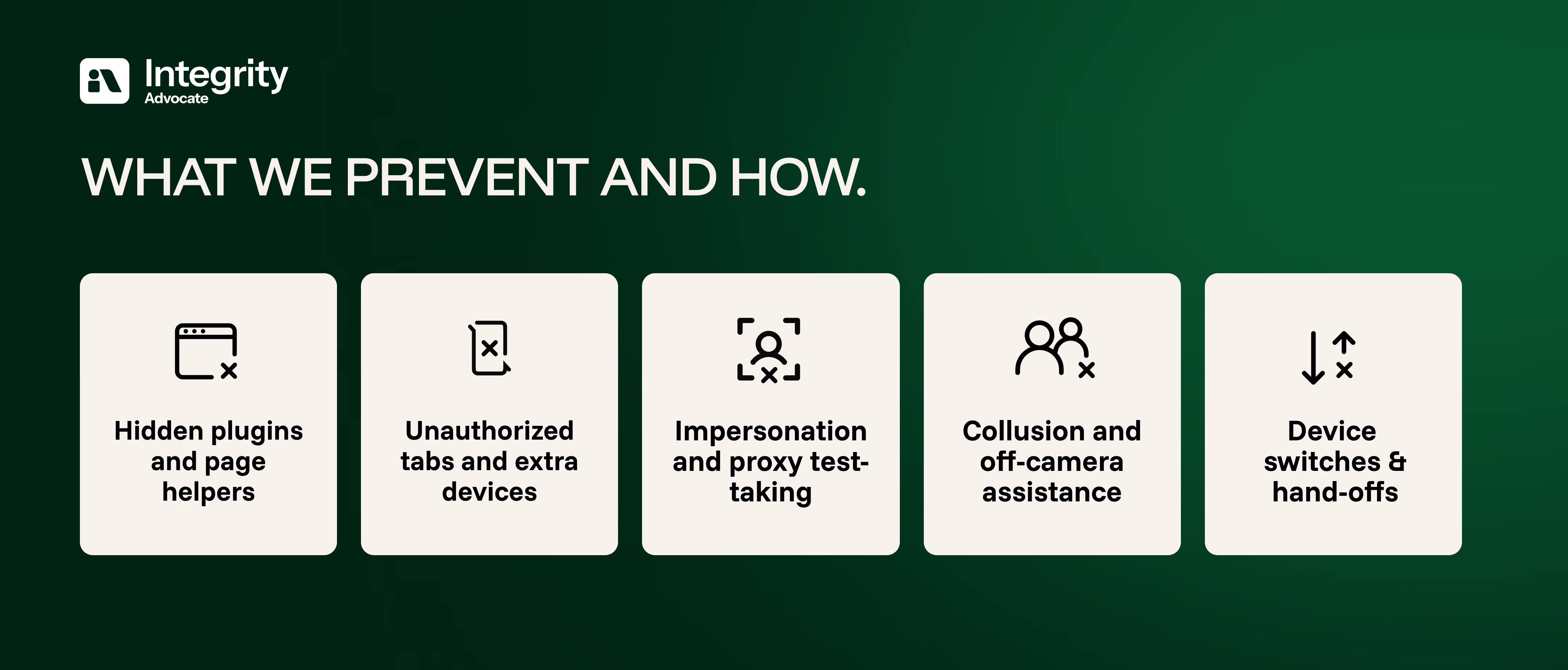
- Hidden plugins and page helpers
We surface indicators of undisclosed browser extensions and on-page answer helpers. Signals and reviewer checks identify prohibited tools, then produce clear, time-stamped evidence for online cheating prevention. - Unauthorized tabs and extra devices
Session behavior and view analysis help flag the use of outside content, second screens, and unapproved devices, aligned to your exam rules. - Impersonation and proxy test-taking
Identity checks check the exam taker to their identification and to their name in the LMS. We confirm the right person at launch and throughout the session. - Collusion and off-camera assistance
We look for signs of remote helpers, verbal cues, and presence of others. - Device switching and session hand-offs
Continuity monitoring and event patterns make mid-exam swaps visible. When something looks off, reviewers step in and your team receives defensible evidence.
Preventing these risks reliably requires the right balance of automation and human judgment to optimize online cheating prevention.
Why hybrid proctoring works
Automation finds patterns at scale and humans add context, fairness, and final judgment. Integrity Advocate blends both to reduce false positives and deliver decisions you can defend to regulators, customers, and accreditors, while keeping the experience seamless for learners with a focus on online cheating prevention.
Designed to fit your LMS and your policies
- No-install launch: Runs where your learners already are.
- Configurable rules: Align settings with your policies and industry needs.
- Accessible and global: Works across devices, bandwidth, and accommodations.
- Audit-ready reporting: Time-stamped evidence and reviewer notes streamline investigations.
What your team gains
- Clear signal, less noise: AI surfaces the right moments, reviewers handle edge cases.
- Privacy by design: Minimal collection and retention aligned to your requirements.
- Scale with confidence: From certification and licensure to workforce training and education.
- Measurable integrity: Trends and outcomes help you refine policies over time.
See it in action
Want to watch how we detect hidden plugins, prevent impersonation, and keep sessions fair without extra burden on learners? Request a demo
{{post-cta}}
OnDemand Webinar: Smarter Safety, Health & Environmental Training Starts Here with D2L and Integrity Advocate
October 14, 2025
|
5 min read
The ANSI Z490.1-2024 update merges in-person and online Safety, Health and Environmental training requirements for the first time, raising the bar for verifiability, accountability, and audit-readiness. In this on-demand webinar hosted by D2L and Integrity Advocate, industry experts break down what has changed, why check-the-box safety training no longer meets compliance expectations, and how the D2L and Integrity Advocate integration delivers verifiable, learner-friendly SHE programs with identity verification, participation monitoring, and audit-ready documentation.
Meeting ANSI Z490 with Confidence
The safety training landscape is evolving, and with the latest ANSI Z490 standard updates, organizations must adapt quickly to ensure compliance, accountability, and learner verification. In this exclusive webinar hosted by D2L and Integrity Advocate, industry experts break down what’s changed, why it matters, and how technology can help you meet new compliance requirements with confidence.
In this on-demand session, you’ll learn:
- What’s new in the ANSI Z490.1–2024 standard, and how it merges in-person and online training requirements.
- Why “check-the-box” safety training no longer meets compliance expectations.
- How D2L and Integrity Advocate partner to deliver verifiable, compliant, and learner-friendly SH&E programs.
- How to demonstrate accountability with identity verification, monitoring, and audit-ready documentation.
- Practical steps to future-proof your training strategy and protect your organization during audits.
Whether you’re an EHS leader, training provider, or compliance manager, this session will help you navigate today’s regulatory landscape, and transform your safety programs into trusted, defensible, and learner-centric experiences.
Watch the Webinar
Access the on-demand recording to learn how D2L and Integrity Advocate are helping organizations modernize SH&E compliance training. Access the Webinar on Demand.
Watch the webinar recording
{{post-cta}}

AI vs. Human vs. Hybrid Proctoring: Which Model Best Protects Exam Integrity?
October 9, 2025
|
5 min read
As online testing expands across education, certification, and compliance training, the choice between AI-only, human-only, and hybrid proctoring has real consequences for exam integrity, fairness, and organizational risk. This post breaks down all three models, their pros and cons, and when each is the right fit, concluding that hybrid proctoring delivers the best combination of efficiency, accuracy, and fairness for most modern assessment environments.
The Evolving Landscape of Online Exam Security
As online testing continues to expand across education, certification, and compliance training, choosing the right proctoring model has never been more important.
AI-only tools promise automation and scalability. Human-only options offer fairness and empathy. Hybrid models combine the best of both, but which one truly protects exam integrity?
This article breaks down the three dominant proctoring approaches, their pros and cons, and what to consider when choosing the right fit for your organization.
1. AI-Only Proctoring: Fast, Scalable, and Automated, but Imperfect
AI proctoring tools use algorithms to detect suspicious behavior automatically, from unusual head movements to multiple voices or unauthorized devices.
While these systems offer speed and scalability, they also raise concerns about accuracy and bias.
Pros:
- Monitors large numbers of exams simultaneously
- Automates flagging and reporting
- Reduces administrative workload
Cons:
- High false positive rates (lighting, gaze, or accessibility issues)
- Lacks human context and judgment
- Raises data privacy and fairness concerns
AI-only systems can be efficient but risk misinterpretation, which can reduced trust among test takers.
2. Human-Only Proctoring: Fair and Contextual, but Limited in Scale
Human proctors oversee exams via live or recorded video, making real-time decisions based on context and behavior.
This model prioritizes fairness, empathy, and human oversight, but introduces scalability and scheduling challenges.
Pros:
- Accurate, contextual decision-making
- Builds trust with test takers
- Reduces false flags and misunderstandings
Cons:
- Labor-intensive and difficult to scale globally
- Higher cost per exam
- Limited flexibility for asynchronous or on-demand testing
Human-only proctoring ensures fairness but struggles to keep pace with modern testing needs.
3. Hybrid (AI + Human) Proctoring: The Best of Both Worlds
Hybrid proctoring blends automation and human oversight to deliver accuracy, fairness, and scalability.
AI handles initial detection, while human reviewers verify each flagged event before reports are finalized. This ensures efficiency without sacrificing integrity.
Pros:
- Reduces false positives with human verification
- Scales efficiently across time zones
- Protects privacy and fairness
- Provides auditable, compliant reporting
Cons:
- Requires platform integration
- May introduce slight delays in review turnaround
Hybrid proctoring creates the balance today’s organizations need, efficient technology guided by human discretion.
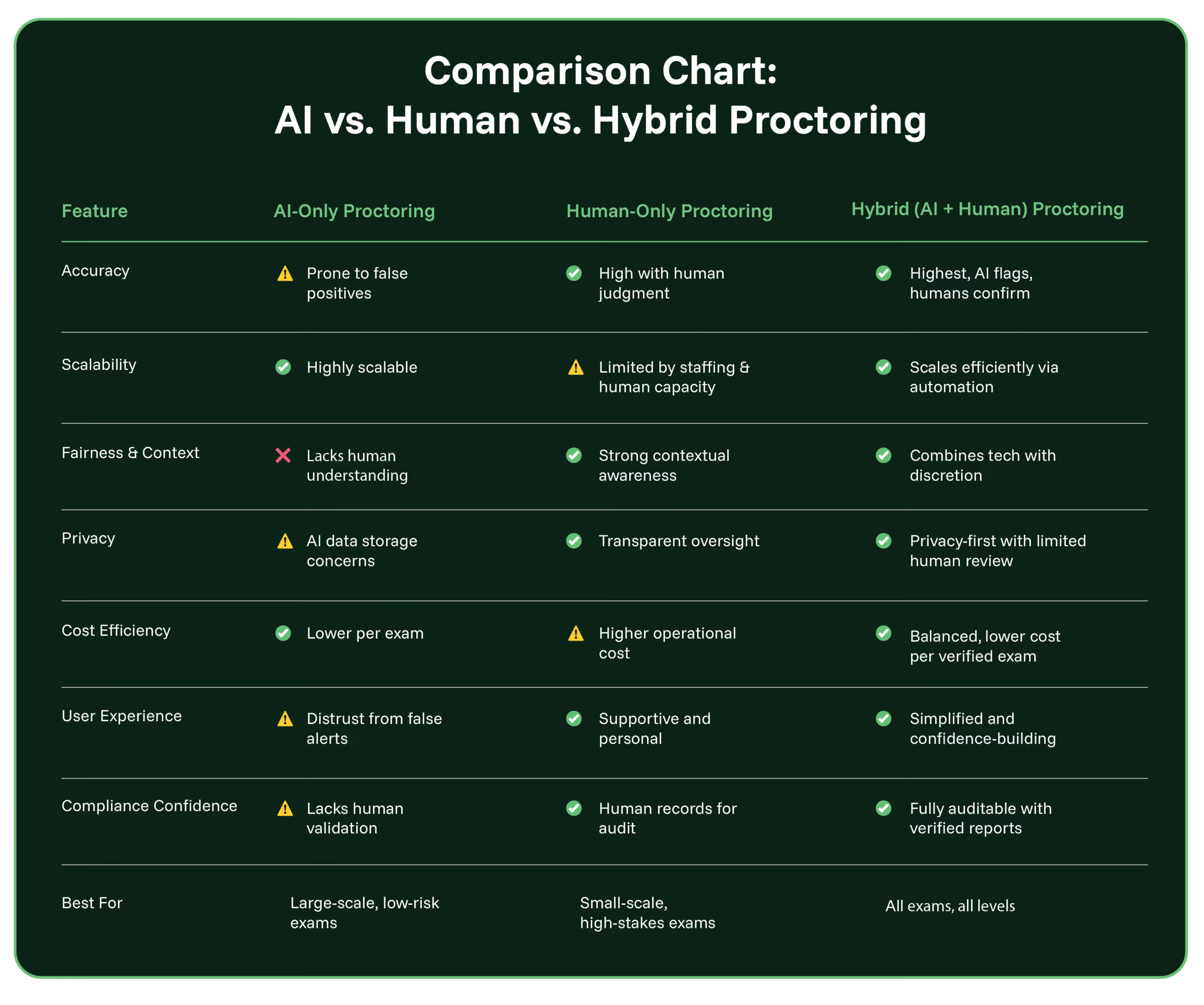
Verdict: Hybrid proctoring delivers the best combination of efficiency, accuracy, and fairness, meeting the evolving needs of modern learning and compliance environments.
When to Use Each Type of Proctoring (and When to Avoid It)
Choosing the right proctoring model isn’t just about features, it’s about fit. Here's when each approach works best, and when it might fall short.
AI-Only Proctoring
AI-only proctoring is a good fit for large-scale, low-stakes testing environments where speed and automation are priorities. It’s ideal for institutions delivering practice exams or formative assessments with minimal impact on final outcomes. If your team is constrained by staffing or budget, and real-time oversight isn’t required, AI-only can offer a fast, lightweight solution.
However, AI-only solutions are risky in high-stakes scenarios like certification, compliance, or licensure exams, especially where fairness, accessibility, and privacy are key concerns. These systems can generate false flags and lack the human context needed to distinguish genuine misconduct from harmless behavior.
Human-Only Proctoring
Human-only proctoring excels in small-group, high-stakes testing scenarios where personal interaction, empathy, and real-time judgment matter most. It's particularly useful for live, synchronous exams or specialized formats like oral exams, interviews, or hands-on assessments. If trust, fairness, and human connection are top priorities, a fully human approach ensures every test-taker is treated with context and care.
That said, this model becomes difficult to scale across large populations or global programs. It also presents challenges for asynchronous testing and tends to be more expensive due to staffing and scheduling demands. Organizations needing rapid turnaround or flexible exam windows may find this model limiting.
Hybrid Proctoring (AI + Human Review)
Hybrid proctoring combines the speed and scalability of AI with the fairness and context of human review, making it ideal for most modern assessment environments. It works especially well for mid- to high-stakes exams delivered at scale, such as workforce certification, compliance training, or higher education finals. Hybrid models support asynchronous access and bring-your-own-device testing, while still delivering human-verified, audit-ready results.
The main limitation is that some hybrid models may involve slight delays between the test and final reporting, depending on review turnaround time.
Why Hybrid Models Are the Future
Organizations are no longer choosing between technology and trust — they’re demanding both. Hybrid proctoring empowers institutions to deliver secure, privacy-compliant, and credible assessments without friction for test takers.
By combining automation and human verification, administrators get:
- Fewer false flags and student disputes
- Stronger audit trails and compliance documentation
- A smoother, more confident test-taking experience
How Integrity Advocate Sets the Standard
Integrity Advocate’s hybrid approach is designed around human-first, privacy-protected verification.
- No software installs required
- Works on any device or browser
- AI-driven detection verified by expert human reviewers
- Transparent, auditable reports administrators can trust
Integrity Advocate’s hybrid proctoring ensures fairness, compliance, and confidence in every assessment.
“Integrity Advocate integrates easily with our current system. It runs smoothly and is aesthetically pleasing; it meets the high standard we have for all our systems. It is also very effective at proctoring while not being too invasive; our users feel comfortable using it. Integrity Advocate strikes the right balance of integrity and privacy, which is hard to find!”
Ready to find the balance between automation and integrity?
Request a Demo to see how Integrity Advocate’s hybrid model redefines online exam security.
{{post-cta}}