novembre 10, 2026
|
3
min read
How Can Healthcare Training Providers Show Someone Earned a Qualification?
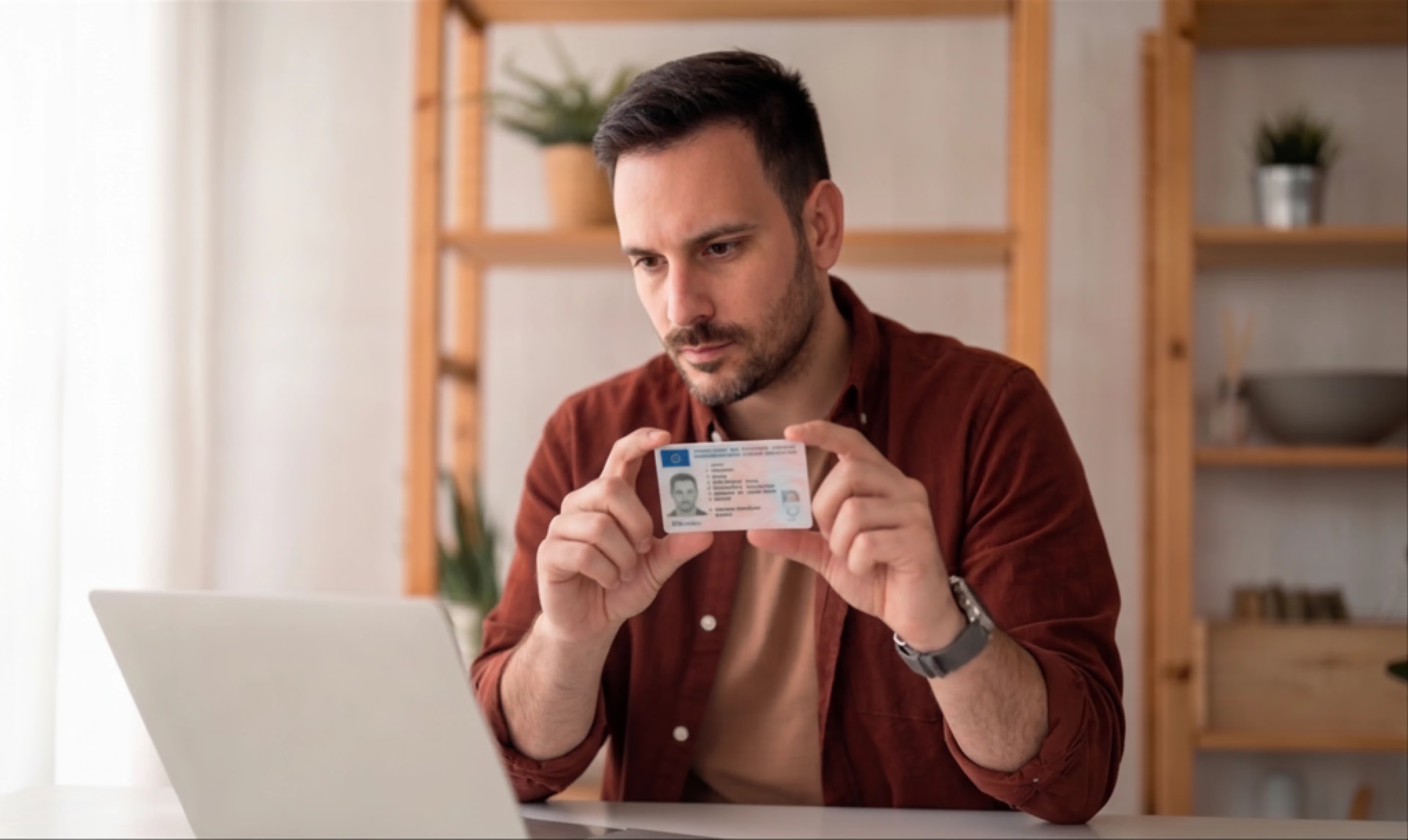
A healthcare training provider shows that someone earned a qualification by linking each claim on the certificate to a record: a completion record for training, a verified result or signed evaluation for assessment, and an issuer record for the credential itself. Healthcare certification records are defensible when someone outside the original decision can trace them.


A healthcare training provider can show how a learner earned a qualification by linking each requirement to a record. A course log shows which modules the learner completed. A verified exam result shows who passed the knowledge assessment. A clinical supervisor's signed evaluation documents the skills the learner demonstrated in practice.
What's the difference between completing training and demonstrating competence?
Completing training means the learner finished the required activities. Demonstrating competence means they performed a defined skill against the program’s criteria.
In a medication administration course, for example, a written assessment might ask a learner to identify the correct procedure. During a supervised demonstration, an evaluator can document how the learner carried it out. If the certificate says the learner demonstrated that skill, the signed evaluation is the record an employer would want to see.
What records should support a healthcare credential?
Start with what your program promises learners and employers. Then identify the evidence that supports each requirement. Integrity Advocate's Credential Security Trifecta organizes those records around three stages: learning, assessment and credentialing.
The most useful detail is often who can confirm what happened. If a clinical placement comes into question, the supervisor who observed the learner can speak to their performance. If a candidate appeals an online exam decision, the program needs the assessment rules and the reviewer's account of what happened during that session.
Where does online proctoring fit in healthcare credential records?
An LMS can record that a learner's account submitted an exam. If an employer later asks who took it, the program also needs a way to connect the result to the person. Online proctoring can provide that identity check and document how a reviewer resolved any concerns during the session. Clinical skills assessed in person still call for evidence from the qualified person who observed them.
For example, suppose a certification candidate consults a reference sheet during an online exam. Whether that matters depends on the instructions the candidate received. A useful assessment record brings together the rule, the reviewer's observation and the program's decision. If the reference sheet was permitted, the record can explain why the candidate's result stood.
Integrity Advocate provides browser-based identity verification, with nothing for candidates to install, and a trained reviewer examines every flagged session before any outcome is issued. The reviewer documents the finding, and the program retains authority over the outcome. That gives the team responsible for the credential a clear account to consult if the candidate or an accreditor asks how a decision was made.
Does a healthcare continuing education quiz need proctoring?
It depends on how the program uses the result. A practice quiz that gives learners feedback may need no proctoring. If passing a final assessment earns a certificate an employer relies on, the provider has a stronger reason to verify who took it and document how any concerns were resolved. If the qualification requires someone to demonstrate a hands-on skill, a qualified observer can document that performance directly.
For a feature-by-feature view of oversight levels, see Integrity Advocate's product tiers.
Could your team verify a credential it issued last month?
Choose one recently issued credential and read its exact wording. If it says the recipient completed training, find the completion record. If it says they passed an assessment, trace the result to the candidate. If it says they demonstrated a clinical skill, find the evaluation and identify who signed it.
That exercise can reveal a gap even when every field in your system is complete. A record marked "passed" may still leave a colleague wondering what the learner passed or who made that judgment. A defensible credential holds up to one question: could a colleague who wasn't involved in the original decision explain what this learner did to earn the qualification?
Book a Demo to see how Integrity Advocate supports the assessment record behind your healthcare credentials.
{{post-cta}}
Continuer la lecture

Le chaînon manquant de la sécurité des patients : la vérification des diplômes de santé
octobre 20, 2025
|
4
min read
La certification de chaque clinicien est une garantie qu'il a été correctement formé, évalué et qu'il est prêt à prodiguer des soins en toute sécurité. Cependant, lorsque la formation obligatoire en santé est suivie en ligne sans vérification d'identité ni suivi de la participation, les établissements se retrouvent à accorder leur confiance à ce qu'ils ne peuvent pas prouver. Cet article examine le déficit d'intégrité des certifications dans les hôpitaux, les cliniques et les établissements de soins de longue durée, les risques d'audit et de sécurité des patients engendrés par des qualifications invérifiables, ainsi que la manière dont le modèle de surveillance hybride d'Integrity Advocate offre une vérification défendable et prête pour l'audit tout au long de la chaîne de conformité en santé.
Pourquoi la vérification d'identité automatisée ne suffit pas pour les examens à fort enjeu
mai 18, 2026
|
10
min read
Tous les fournisseurs de surveillance d'examens prétendent vérifier l'identité, mais ils ne parlent pas tous de la même chose. Découvrez les limites des contrôles d'identité entièrement automatisés et les questions à poser lors de l'évaluation d'une plateforme.

La surveillance par IA seule génère des faux positifs. Voici ce que cela coûte à votre programme.
juin 24, 2026
|
5
min read
La surveillance par IA se contente de signaler des comportements. Elle ne les évalue pas. Lorsque les systèmes automatisés se passent de l'examen humain, des invalidations injustifiées surviennent, laissant les programmes avec des résultats qu'ils ne peuvent pas défendre.